Ardèche, land of rallies

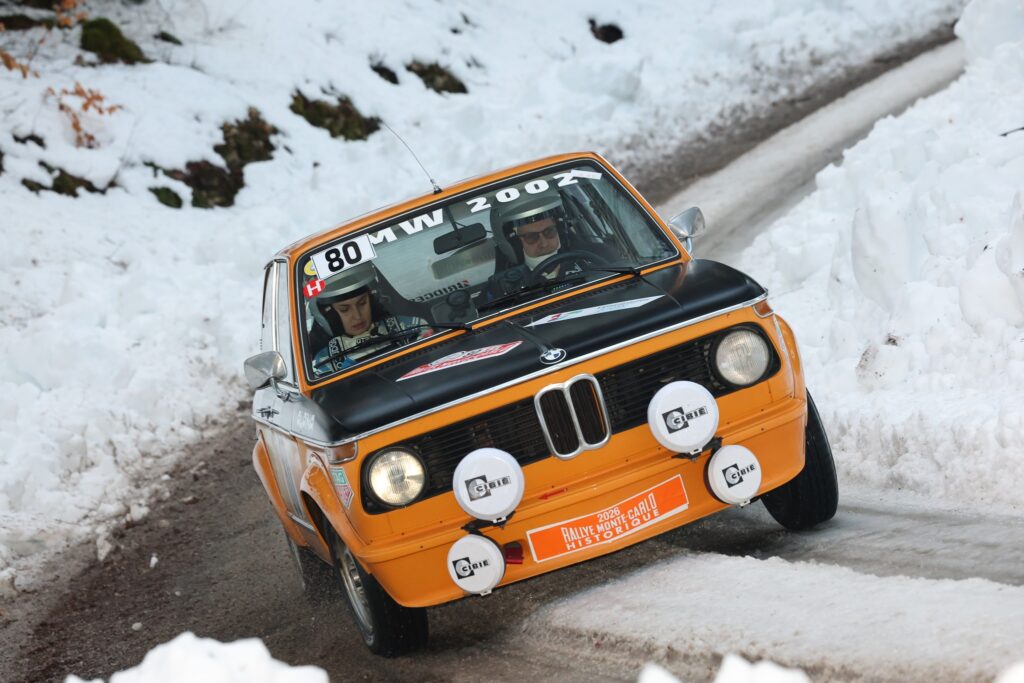
On Wednesday, February 4th, the Ardèche region once again enjoyed a day entirely dedicated to rallying, as the Rallye Monte-Carlo Historique passed through . This stage once again confirmed the region’s deep connection with motorsport.

The second day of racing, starting from Valence at 8:00 a.m., took place entirely on the roads of the Ardèche. A total of 231 crews tackled a challenging route, punctuated by four special stages and a long series of time checks that passed through iconic locations in the region.

A welcome from a true rally land

Along the entire route, the public responded with great participation. In Vals-les-Bains, Privas, and especially Antraigues-sur-Volane, numerous enthusiasts gathered along the roadsides and in the towns to watch the historic cars pass by, creating a warm and authentic atmosphere.

A well-established tradition was also renewed in Antraigues-sur-Volane: the stop in front of the La Remise restaurant, where the Jouanny family welcomed crews and organizers with their customary apple pie, transforming the time check into a convivial moment much appreciated by the participants.

Selective tests and demanding conditions

From a sporting standpoint, the stage put the crews and cars to the test. The special stages, partly held on roads closed to traffic, required great driving precision, partly due to the winter conditions and the characteristics of the road surface.

Between technique, landscapes and tradition, the Ardèche has confirmed its central role in the history of rallying, offering an ideal backdrop for one of the most iconic stages of the Rallye Monte-Carlo Historique.

Rallye Monte-Carlo Historique 2026: An intense and selective first stage

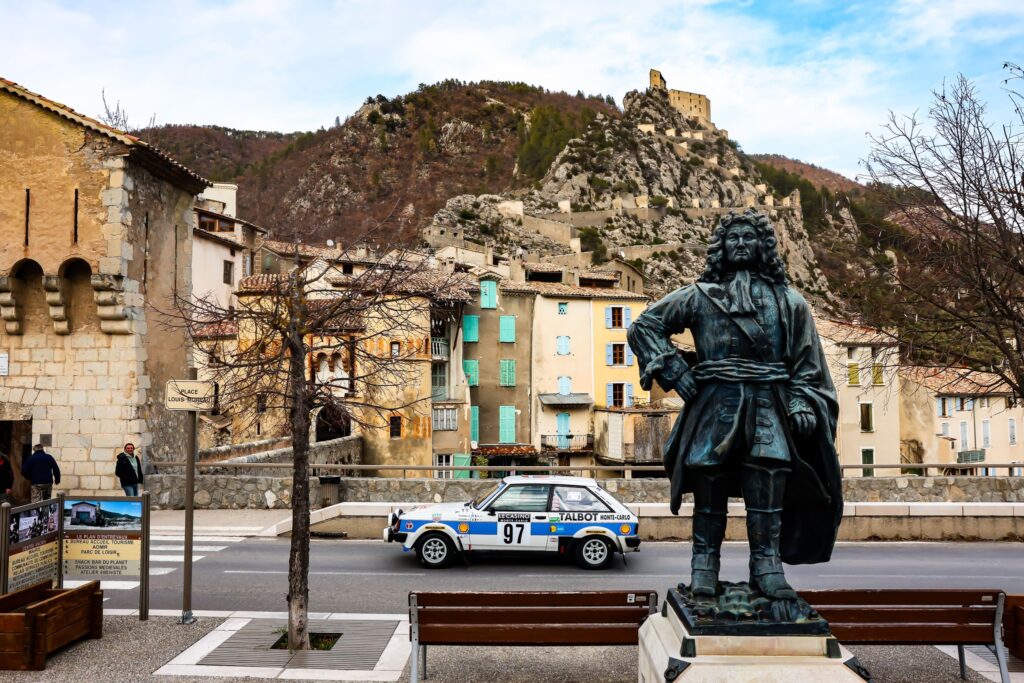
The first stage of the 2026 Rallye Monte-Carlo Historique immediately made the difficulty of this edition clear. The start of the race was anything but smooth, characterized by challenging weather conditions, technical tests, and a high pace that required maximum concentration from the first kilometers.

Difficult conditions and high pace

The Leg 1 route featured challenging and variable sections, with often treacherous asphalt and ice in some sections, especially in the higher elevations. This environment placed the crews’ ability to adapt crucially, as they were challenged to find the right balance between precision, strategy, and mechanical reliability.

A more selective stage than the past

Compared to some previous editions, this first day of racing was distinguished by greater selectivity. The stages, held on roads closed to traffic, favored a smoother ride but at the same time challenged those who failed to correctly interpret the road surface and the constant variations in grip.

Leadership built with consistency

The pairing of Olivier Campana and Lydia Campana emerged at the end of the stage , putting in a solid and consistent performance that allowed them to take the lead in the overall standings. A leadership they built, stage after stage, thanks to intelligent pace management and impeccable reading of the race.

Plot twists and technical problems

There were plenty of surprises. Some top-level crews saw their races compromised by technical problems already in the first special stages, confirming how the Rallye Monte-Carlo Historique remains a severe challenge not only for drivers and navigators, but also for the mechanics of the historic cars.

A look at the next stages

With the first stage underway, the race is now in full swing. The upcoming stages promise new scenery, fascinating roads, and even more challenges, in a rally that continues to represent one of the most comprehensive and fascinating testing grounds in the international historic racing scene.

The ICE 2026: The ultimate motorsports event on the ice of St. Moritz

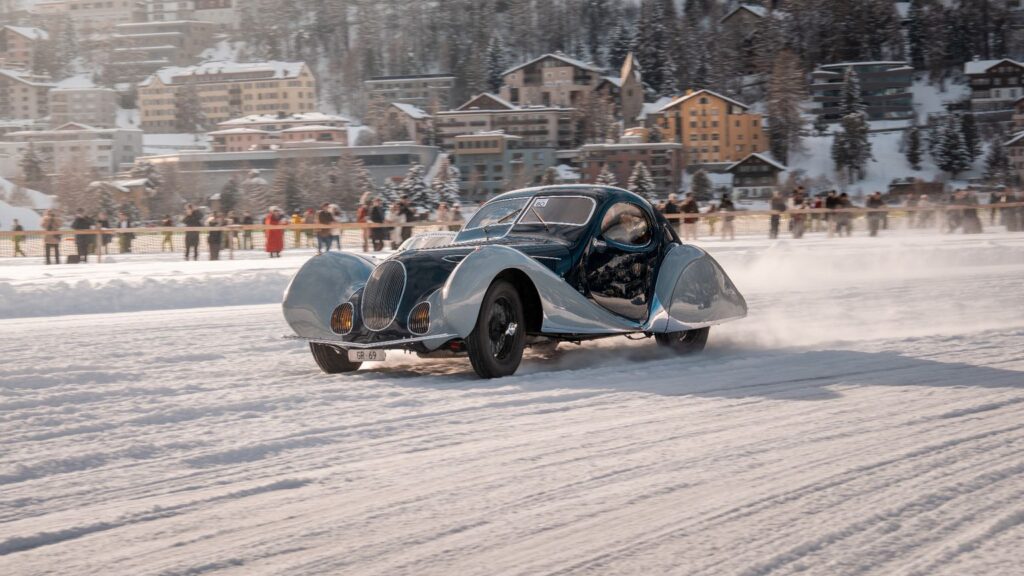
St. Moritz hosted the 2026 edition of The ICE – International Concours of Elegance , confirming its position as one of the most prestigious and evocative events on the international automotive scene. On the frozen Engadine lake, legendary cars and design icons brought to life an event capable of uniting culture, style, and automotive history, with the support of main partner Richard Mille .

The 2026 edition featured a selection of top-tier cars, awarded in various official categories, offering the public a cross-section of the evolution of sports and collectible cars.

Best in Show

The most prestigious award was given to the 1937 Talbot-Lago T150C SS “Teardrop,” a true masterpiece of the pre-war era. Its aerodynamic lines, refined construction, and historical significance make it one of the finest expressions of 1930s European automotive design.

Legendary Liveries

The category dedicated to the most iconic liveries awarded the Lancia Stratos , an undisputed symbol of the rally world. A car that defined an era not only for its sporting successes, but also for its visual identity that has become part of the collective imagination.

Open Wheels

In the single-seater category, the award went to the Maserati 4CLT , a testament to the golden age of open-wheel racing. A car that represents the technical and sporting excellence of the Trident brand in the post-war period.

Birth of the Hypercar

The Jaguar XJ220 has been recognized as the forerunner of the modern hypercar concept. Introduced in the early 1990s, it anticipated the performance, technical solutions, and design language that would define the segment for decades to come.

Barchettas on the Lake

The award for racing barchettas went to the Ferrari 750 Monza , a pure example of essentiality and racing vocation. A car that embodies the philosophy of 1950s racing sports cars.

Icons on Wheels

Still a protagonist, the Talbot-Lago Teardrop also received recognition as an absolute icon on wheels, underlining its transversal value between art, engineering and design.

Best Sound

The award for sound went to the Pontiac Vivant , capable of standing out for its powerful and recognisable mechanical voice, an element that is increasingly appreciated also in concours d’elegance.

With the 2026 edition, The ICE confirms its position not only as a concours d’elegance, but as an international cultural event, capable of narrating the automobile through different eras, styles, and languages, in one of the most iconic settings in the world.

A Mercedes 300 SL Gullwing leads the Artcurial auction in Paris

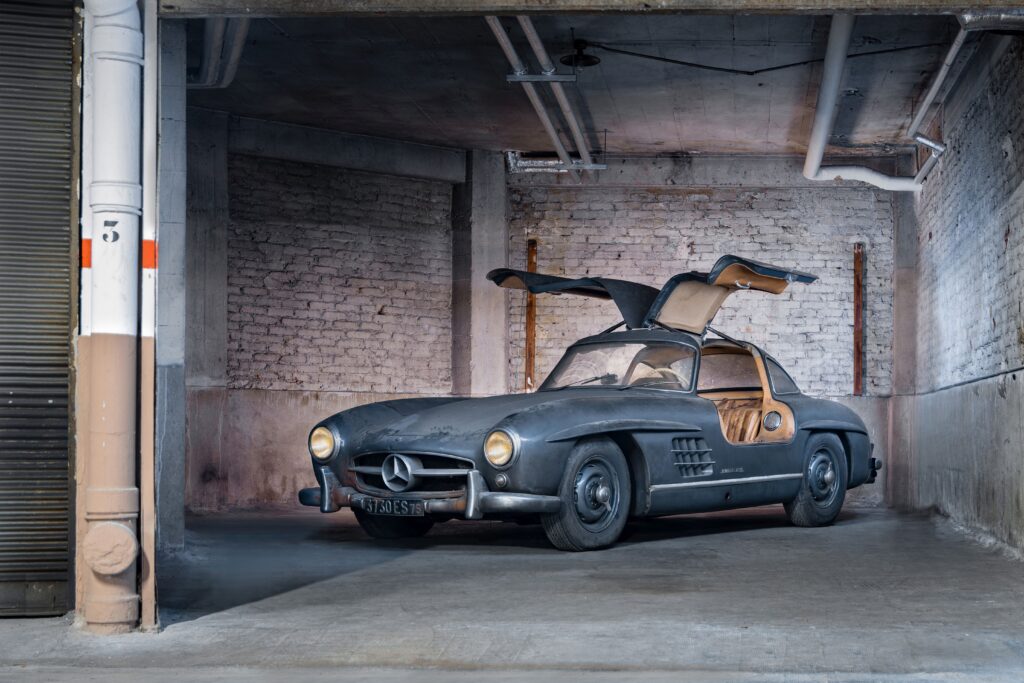
A Mercedes-Benz 300 SL Gullwing captured the attention of Artcurial’s Automobile Legends auction in Paris, selling for €4.4 million and becoming the top lot of the sale.

The event, held at The Peninsula Paris, featured a particularly rare and fascinating example: a 300 SL in authentic garage-find condition, completely original and never restored. With just 34,000 km on the clock, the car is one of the best-preserved examples still in existence. Delivered new in France, it is part of a select group of approximately thirty examples destined for the domestic market at the time.

What makes this Gullwing even more desirable is its technical configuration: high-performance NSL engine, sports suspension and Rudge centre-lock wheels, solutions that bring it very close to the specifications of the more extreme versions, including those with aluminium bodywork intended for competition.

Overall, the Paris auction raised approximately €15 million, confirming its status as one of the most solid events on the international calendar. Alongside the Mercedes, other lots of great historical and collectible significance were also included.

Among these, the Ferrari F92A, raced by Jean Alesi in the 1992 Formula 1 World Championship, stands out, selling for over €2.9 million. The Tyrrell 018-Ford Cosworth, the first Formula 1 car driven by the French driver, also achieved a good result, selling for over €800,000.

Among historic grand tourers and sports cars, a first-series 1967 Lamborghini Miura P400 reached €1.4 million, while a Porsche Carrera GT nearly reached €1.65 million, confirming the continuing high interest in modern supercars with a historic pedigree.

French models also performed well: an Alpine A110 prepared to Jean-Pierre Jabouille’s specifications and an Alpine A610 Olympique attracted the attention of collectors, achieving significant sales.

Sydney Harbour Concours d’Elegance: A grand return to Cockatoo Island in 2026

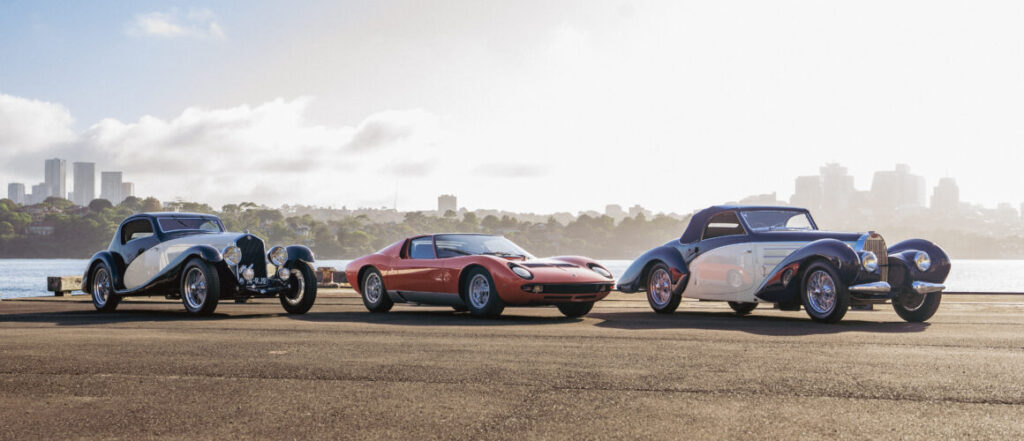
There are places that seem born to celebrate beauty. Cockatoo Island , in the heart of Sydney Harbour, is one of them. And it is here that one of the most fascinating events on the international automotive scene will return in February 2026 : the Sydney Harbour Concours d’Elegance .

An event that is more than just an exhibition of extraordinary cars, but a true meeting of history, design, and passion , immersed in a unique setting. Following the success of previous editions, the Concours is preparing to reaffirm its role as the absolute reference in the Southern Hemisphere for collectors, enthusiasts, and professionals.

The format remains true to its philosophy: quality over quantity . A small selection of carefully selected cars, each with a story to tell. Cars range from the great icons of the pre-war era to contemporary supercars, including masterpieces of European design, American muscle, and bold interpretations from Japan.

What makes the Sydney Harbour Concours truly special is its unconventional spirit. There are no cold judgments or sterile technical sheets here: the participants themselves decide the Best of Show , transforming the most coveted prize into a genuine recognition born of mutual respect among collectors.

The competing classes recount the evolution of the automobile across different eras and cultures: from the timeless elegance of the great European coachbuilders, to the celebrations dedicated to iconic brands, to the most modern and experimental interpretations of performance and design. A visual and cultural journey that speaks to diverse audiences, yet united by the same passion.

The Concours isn’t limited to the static display, however. The experience extends to the road, with exclusive drives that allow participants to experience the cars for what they truly are: machines born to move, to be driven, to evoke emotions.

The 2026 Sydney Harbour Concours d’Elegance promises to be much more than an event: it will be a celebration of the automobile as an object of art, engineering and culture, framed by one of the most iconic panoramas on the planet.

An event to mark in your diary, for those who see the car not just as a vehicle, but as a story to be lived.

Dakar Classic: A Land Rover takes victory in the rally raid reenactment

The latest edition of the Dakar Classic , the competition for historic vehicles that runs alongside the modern Dakar and celebrates the original spirit of rally raid, concluded in Saudi Arabia . Over 210 crews, including vintage cars and trucks, faced a grueling route of more than 7,200 kilometers in total, with over 4,100 kilometers of special stages covering sand, rocks, and pure navigation.

The overall victory went to the crew of Karolis Raisys and Christophe Marques , driving a Land Rover 109 Series III Station Wagon . Their victory was built day after day thanks to consistency, precision navigation, and the great reliability of the British vehicle, a true symbol of the pioneering era of African raids.

For Raisys, already a protagonist in previous editions, the success represents the definitive consecration, obtained with a new navigator but with the same methodical approach that allowed the crew to best manage the difficulties of the route.

Behind the winning Land Rover, highly experienced crews stood out, confirming the high technical level of the Dakar Classic. The Italian crews also performed well, with strong finishes that demonstrate the growing competitiveness of classic cars prepared in our country.

Also noteworthy was the participation of the Ladies Dakar Team , the first all-female Italian crew in the history of the Dakar Classic. Aboard a historic truck, the team completed the race, achieving a result of absolute sporting and symbolic value, demonstrating once again how the Dakar Classic is also a platform for inclusion and shared passion.

The Dakar Classic thus confirms itself not just as a competition, but as a true journey through the history of motorsport: a challenge of endurance, navigation and mechanical reliability, where the great protagonists of the past return to live on the desert tracks.

Is the market collapsing? NO — it’s realigning with true passion.

With reference to the latest article published by La Stampa, signed by Vincenzo Borgomeo, I feel it is necessary to outline a few reflections.

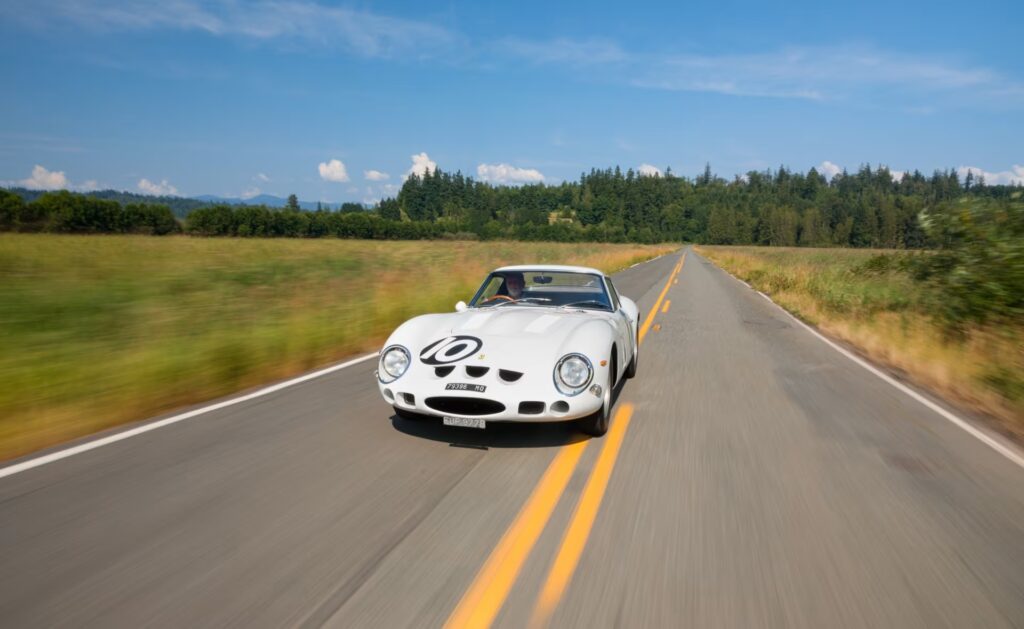
In recent days, alarmist tones have once again been used to describe an alleged “collapse” of the classic car market, taking as a pretext the auction sale of a Ferrari 250 GTO at a price below the most sensational expectations.
This, however, is a superficial interpretation that risks misleading public opinion and trivializing a sector that is complex, historical, and cultural.

This is not a collapse: it is a realignment.
If the market were truly collapsing, cars would not be selling. They would remain unsold, withdrawn, rejected by the market. But that is not what is happening. Top-tier automobiles continue to find buyers—simply at more coherent values, similar to those of around twenty years ago, before the sector was swept up in a wave of financial investments, speculative funds, and “package deals” that artificially inflated prices.

What we are witnessing today is not a free fall, but a natural correction: a return to values more closely linked to the historical, technical, and collectible reality of the cars themselves, rather than to irrational expectations of double-digit returns.

The market holds when passion guides decisions.
The classic car market remains strong—and will continue to do so—when purchases are driven by genuine passion: driving, participating in events, and experiencing automotive history.
It weakens, on the other hand, when a car is treated purely as a financial instrument, stored away in a vault while waiting for a capital gain.

I have long maintained that classic cars are not stocks or cryptocurrencies. They are cultural, technical, and sporting objects that require knowledge, maintenance, and use. When this principle is forgotten, the market becomes distorted. When it is restored, the market stabilizes.

The real issue, therefore, is not the market itself, but the narrative surrounding it.
To speak of a “collapse” of the historic automotive sector would require deep automotive culture and an understanding of the dynamics of the classic vehicle world: historic registers, differences between national markets, auction mechanisms, private sales, and above all, the history of the cars themselves.
Without this foundation, there is a risk of turning a single auction result into a sensational headline—perhaps effective at generating clicks, but ineffective at providing accurate information.

In conclusion, the classic car market is not collapsing. It is simply returning to breathing the clean air of true passion after years of inflated excesses.
Great cars remain great. Cars with history, use, and soul will continue to be desired.
What is truly collapsing, if anything, is the illusion that everything can rise indefinitely without passion, culture, and knowledge. More than a crisis, this is a return to the true essence of collecting.

The racing world bids farewell to Hans Herrmann

The racing world says goodbye to Hans Herrmann, one of the most iconic figures in postwar motorsport. Passing away at the age of 97, Herrmann was a key figure in an unrepeatable era, where talent, courage, and pioneering spirit coexisted on the track at every turn.

Born in Stuttgart in 1928, Herrmann entered motorsport after an initial career away from racing, but his passion for speed soon took over. His first successes came in German national competitions, including rallies and hillclimbs, where he demonstrated a clean, fast, and surprisingly effective driving style.

His international career took off in the 1950s with his entry into the Mercedes-Benz factory team , at a time when racing meant taking extreme risks. Herrmann quickly established himself as one of the team’s most reliable drivers, distinguished by his composure and tactical intelligence. At the same time, he also took part in the Formula One World Championship, achieving notable results in an era dominated by difficult vehicles and unforgiving tracks.

After Mercedes’ exit from racing, Herrmann pursued a long and diverse career, spanning both single-seaters and endurance racing. It was in endurance racing that he found his true calling, becoming one of the most respected drivers on the international scene.

The moment that definitively cemented his place in history came in 1970, when he won the 24 Hours of Le Mans at the wheel of the Porsche 917. That victory represented Porsche ‘s first overall victory in the French classic and marked a turning point in the history of the Stuttgart brand. After years of trying and placing, Herrmann achieved his most coveted goal in the final phase of his racing career.

Beyond his achievements, Hans Herrmann is remembered for his extraordinary ability to survive spectacular crashes, often escaping unscathed. This characteristic earned him an almost legendary reputation and helped build the image of a driver as fast as he was resilient, a symbol of heroic and authentic motorsport.

After retiring from racing, he remained a constant presence in the world of classic cars and celebratory events, a direct witness to an era that forever marked European automotive culture.

With his passing, we lose not only a great driver, but one of the last representatives of a generation that built the legend of modern racing. A name destined to remain etched in the memory of those who experience motorsport as a passion, history, and identity.

Salon Privé London 2026 returns to London: the concours where every car is for sale.

Salon Privé London will return to the British capital from 16 to 18 April 2026 , confirming its venue at the Royal Hospital Chelsea . The event stands out on the international scene for its now consolidated formula: a concours d’elegance and commercial exhibition coexist in a single event, with all the cars present available for purchase.

The 2026 edition will see the introduction of the Automotive Gallery , a space dedicated to previews and models presented by internationally renowned manufacturers and dealers. Brands that have already announced their participation include Aston Martin, Maserati, Lotus, MG, Brabus, Jensen, and Elektron Motors .

Particular attention will be given to McLaren , featuring a selection of road and racing cars, at a time of strong visibility for the English brand, also on a sporting level.

The program will also include themed exhibitions, club-only areas, and a growing presence of restomods , an increasingly central segment of the collector car market. Alongside historic models, there will also be contemporary supercars and extremely high-end vehicles, aimed at an international audience of enthusiasts and collectors.

The ASI-Bertone Collection returns to Turin

The Stellantis Heritage Hub will host one of the most iconic heritages of Italian automotive design from 2026.

The ASI-Bertone Collection is preparing to return home. Starting in early 2026 , one of the most fascinating legacies of Italian automotive design will find a new home in Turin , within the Stellantis Heritage Hub in Mirafiori, thanks to an agreement between the Automotoclub Storico Italiano (ASI) and Stellantis Heritage .

A symbolic and strongly identifying return: Turin is the historic cradle of Bertone and the place where, for over half a century, some of the most iconic interpretations of international automotive design were born. The collection, acquired and safeguarded by the ASI since 2015, includes prototypes, production models, concept cars, and unique one-offs , spanning a period from the 1950s to the early 2000s .

Located at Via Plava 80 , the collection will enrich the Heritage Hub’s exhibition itinerary, offering visitors a journey through the evolution of Bertone design: experimental lines, visionary solutions, and cars that anticipated stylistic languages ​​destined to become a point of reference for entire generations of designers and manufacturers.

As underlined by Roberto Giolito , head of Stellantis Heritage Italia, the arrival of the ASI-Bertone Collection represents a precious opportunity to tell the profound bond between automobiles, creativity and territory , valorising a history made of intuition, design courage and continuous aesthetic and technical research.

A return that is not only geographical, but cultural: the Bertone collection returns to dialogue with the city that saw it born, ready to inspire enthusiasts, professionals, and new generations of designers.