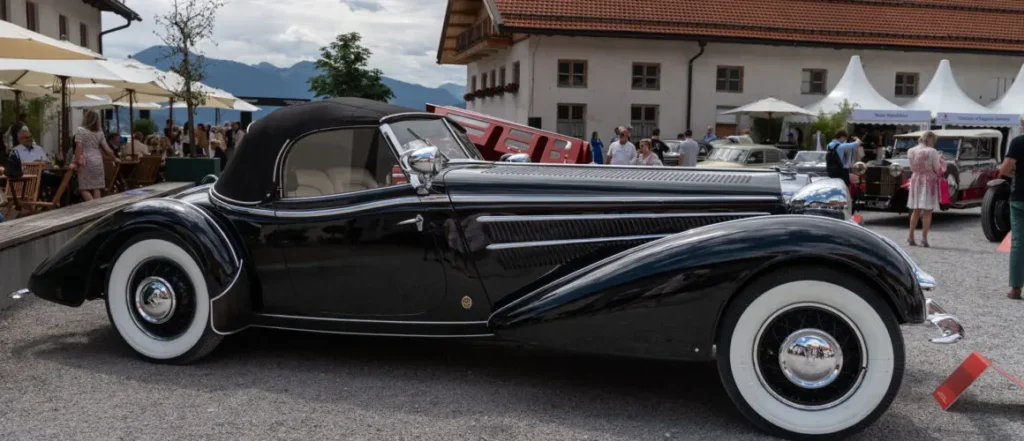
The Horch 855 Special Roadster wins Best of Show at the Concours of Elegance Germany

An extremely rare 1939 Horch 855 Special Roadster , bodied by Gläser, won the prestigious Best of Show title at the second annual Concours of Elegance Germany.

The event returned to the evocative setting of Gut Kaltenbrunn , on the shores of Lake Tegernsee, bringing together a refined selection of road and racing cars from nine different decades. What made the main prize unique was the way it was awarded: the winner was chosen directly by the competition participants.

The award-winning Horch represents one of the most important surviving examples of pre-World War II German luxury automobile production. It is believed that only five to seven examples were built, with chassis number 855007 believed to be the only original production 855 Special Roadster to survive.

Initially delivered in the Netherlands, the car later became part of several important international collections. In 1954, it appeared in the pages of Road & Track magazine and was also driven by actor Rock Hudson in the film “The World Is Ours.”

After a careful restoration carried out in Germany, the Horch was also exhibited for a period in the Audi Museum in Ingolstadt, before entering the current private collection.

Maserati protagonist in the centenary of the Trident

One of the main themes of the 2026 edition was dedicated to Maserati , on the occasion of the hundredth anniversary of the first appearance of the famous Trident symbol.

The Modena-based manufacturer’s vehicles have won several awards. A 1955 Maserati 300S won the 1950s category, while a 1962 Maserati 5000 GT, with bodywork by Allemano, won the 1960s class.

The Maserati Special Prize was awarded to the 1959 3500 GT Convertible Prototype , designed by Giovanni Michelotti and built by Vignale. The car traveled to Germany from Texas specifically to participate in the event.

The winners of the different eras

The Concours celebrated some of the most significant automobiles of the twentieth century, divided by decade.

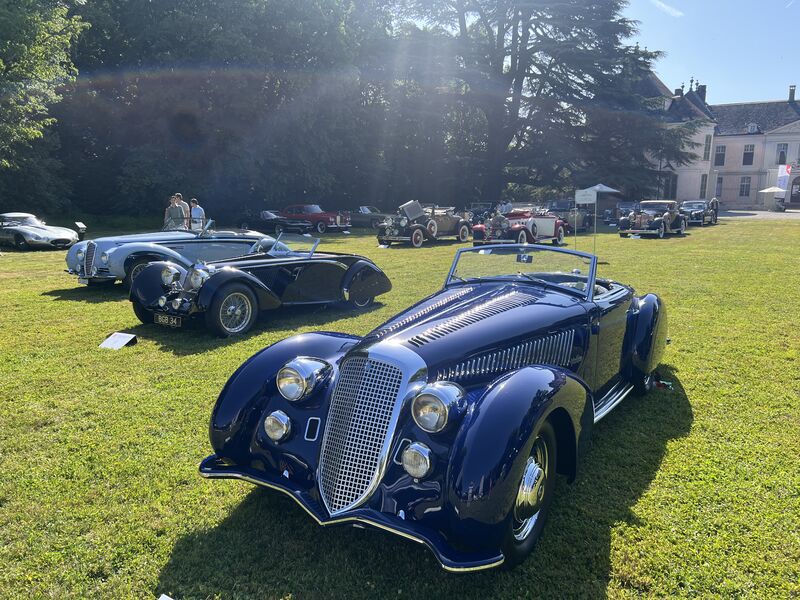
The award-winning cars include a 1928 Bentley 4½ Litre Open Tourer with bodywork by Van den Plas, a 1931 Alfa Romeo 6C 1750 Gran Sport Spyder and a 1947 Delahaye 135 MS Roadster.

The winner in the 1970s category was a newly restored 1971 Ferrari 365 GTB/4 Daytona, while the 1980s category was won by a 1985 Aston Martin V8 Vantage, originally ordered by Sir Elton John.

The Future Classics award went to a 1995 Lamborghini Diablo SE30 .

Among the special prizes, the 1933 Armstrong Siddeley Special Six received the Chairman’s Award, while the Patron’s Award, presented by Prince Leopold of Bavaria, was given to a 1955 Maserati 150S/200S Prototype.

Rounding out the weekend’s program were the RM Sotheby’s Tegernsee auction, the Club Trophy, the Emerging Collectors Concours, the Ladies Concours, and the new free exhibition called Gallery. The highlight of the auction was a 2015 Koenigsegg One:1.

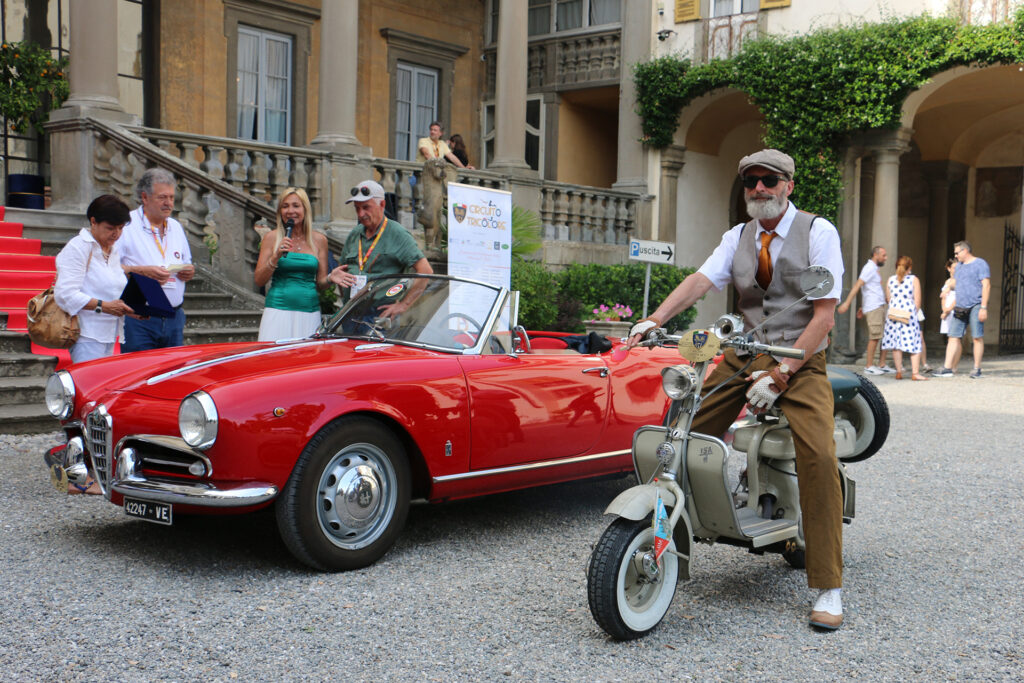
ASI Tricolore Circuit: Cars and motorcycles take center stage at the San Pellegrino Terme Concours d’Elegance

From July 10th to 12th, San Pellegrino Terme will once again host one of the most fascinating events of the ASI Tricolore Circuit. The Concorso d’Eleganza Città di San Pellegrino Terme, organized by the Bergamo-based Club Orobico Auto e Moto d’Epoca, will bring together historic cars and motorcycles for a weekend dedicated to style, culture, and a passion for vintage motoring.

The event stands out on the national scene for its ability to bring together two- and four-wheeled vehicles, showcasing the elegance of vehicles from different eras. The common thread will be beauty, expressed through the most iconic body designs of the 20th century, the scenic routes of the Bergamo area, and the prestigious historic homes that will host the various stages of the event.

Friday, July 10th, will be entirely dedicated to motorcycles. After meeting in San Pellegrino Terme, participants will embark on a route that will pass through Passo Zambla, Clusone, Lovere, and Riva di Solto, before returning via Endine and Selvino.

Saturday, July 11th will be the highlight of the competition. In the evocative setting of Villa Pesenti Agliardi, in Paladina, the automobile exhibition, the ASI jury’s evaluations, and the public presentation of the selected vehicles will take place.

The motorcycles will instead take a dedicated route, before reaching the Villa’s park in the afternoon to rejoin the four-wheelers.

The Fuoriconcorso will also return in the same context, a parallel event that over the years has become a particularly popular gathering for collectors and enthusiasts. An open gathering with no selections, the focus will be on the pleasure of showing off and sharing your classic vehicle.

The reception at Villa Pesenti Agliardi will begin at 2:30 PM, with the public voting from 4:00 PM. The awards ceremony for the winning cars and motorcycles will take place at 6:00 PM.

On Sunday, July 12th, the Competition will move to the Grand Hotel in San Pellegrino Terme, a true symbol of the Belle Époque. Its richly decorated façades, monumental staircases, and historic park will provide the backdrop for the final exhibition and awards ceremony, restoring the building to its original sophisticated atmosphere for a day.

The 2026 edition will be structured around three main themes. The first will celebrate ASI’s 60th anniversary through several iconic models presented in 1966, the year the Federation was founded.

A second in-depth study will be dedicated to the cars that shaped the imagery and culture of the Dolce Vita, while the third will pay homage to the centenary of Carrozzeria Touring, with a selection of its most refined creations.

Among the cars present was the 1967 Lancia Flaminia GT, protagonist of the ASI Net-Zero Classic project and of a 10,000-kilometer test drive carried out on bio-petrol.

Goodwood Festival of Speed ​​2026: Motorsport history returns to the stage

From 9 to 12 July , the Goodwood Festival of Speed ​​will once again transform the famous hill climb in front of Goodwood House into the centre of the motoring world.

The 2026 edition promises to be particularly rich, with a program capable of combining great pages of motorsport history, current champions, legendary cars and some of the most anticipated new arrivals on the international scene.

This year’s theme is “The Rivals: Epic Racing Duels ,” a tribute to the rivalries that have shaped the history of racing. This common thread will run throughout the four-day event, bringing back some legendary battles.

Sixty years since Ford’s historic one-two punch at Le Mans

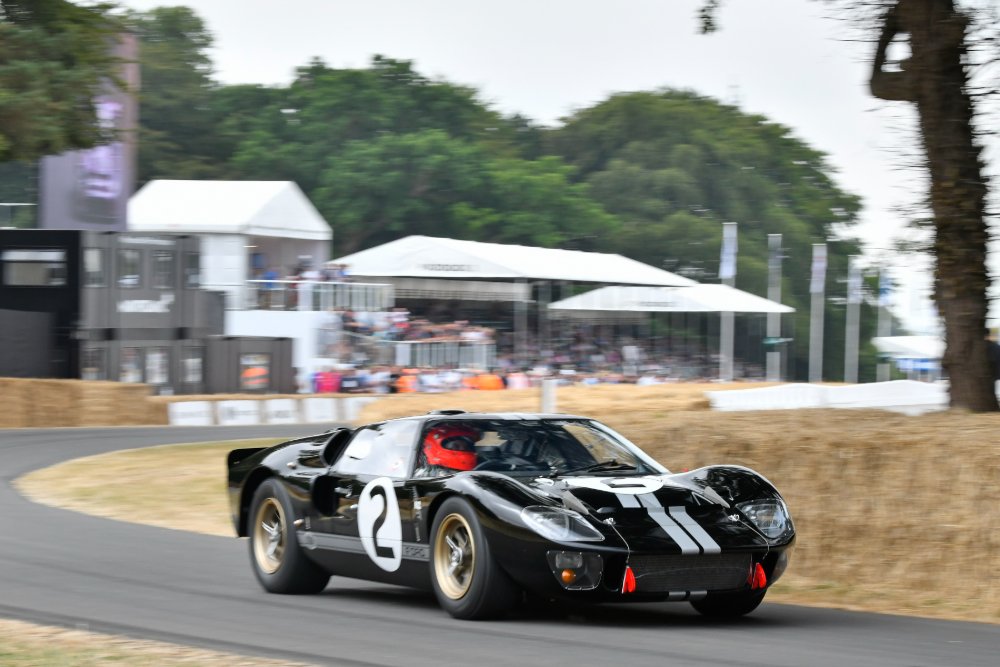
Among the most eagerly awaited moments will be the celebration of the sixtieth anniversary of the 1966 24 Hours of Le Mans , which went down in history for the extraordinary one-two finish won by Ford.

The three Ford GT MkIIs that took the top three overall will return together to the Goodwood hill climb for a rare dynamic display.

A special opportunity to revisit the protagonists of one of the most famous challenges in the history of motorsport, a symbol of the heated rivalry between Ford and Ferrari in the 1960s.

The memory of the challenge between Hunt and Lauda

The Festival of Speed ​​will also celebrate fifty years since the 1976 Formula 1 World Championship, marked by the duel between James Hunt and Niki Lauda .

A season that has become legendary for the intensity of the sporting challenge, for the dramatic accident at the Nürburgring and for the decisive epilogue in the final race held on the Fuji circuit.

The rivalry between the two champions will be one of the central themes of the 2026 edition, helping to tell the story of an unrepeatable period in Formula 1.

Lando Norris celebrates the world title

Among the main protagonists of the weekend will be Lando Norris , called to tackle the climb on Saturday at the wheel of the McLaren MCL60.

For the British public, it will be an opportunity to celebrate the new Formula 1 World Champion, welcomed on the Goodwood hill after winning the world title.

McLaren will also bring two particularly significant cars from its history: the MP4/8 , with which Ayrton Senna won the 1993 Australian Grand Prix, and the rare MP4/8B , which has not been shown to the public since Senna and Mika Häkkinen tested at Estoril that same year.

Damon Hill back in the Williams FW18

Another significant return will be that of Damon Hill , who will return behind the wheel of the Williams FW18 with which he won the Formula 1 World Championship in 1996.

Thirty years after that season, the British driver will once again tackle the Goodwood hill climb with the restored single-seater, bringing back to the scene one of the most iconic Formula 1 cars of the 1990s.

News and international previews

Alongside the historical celebrations, the Festival of Speed ​​will also host numerous previews.

Bentley will unveil the new Continental Supersports for the first time in the UK , a version designed to offer a purer driving experience, with rear-wheel drive and no hybrid system.

Renault will instead bring the 5 Turbo 3E , a fully electric reinterpretation of the legendary sports car created for homologation in Group B. With a power output of 547 hp, the new model combines references to the past and contemporary technological solutions.

BMW will also show the Vision M Concept , a prototype that previews the future of the German manufacturer’s sports department and offers a first indication of what could be the next generation of the electric M3, equipped with four motors.

Singer stars in Central Feature

Singer will be the principal partner of the spectacular Central Feature , the monumental sculpture that dominates the space in front of Goodwood House each year.

As per tradition, the work will be signed by Gerry Judah, while its appearance will remain secret until the official opening of the gates.

Featuring historic cars, champions, anniversaries, and new technologies, the 2026 Goodwood Festival of Speed ​​is preparing to offer four days dedicated to the passion for automobiles and the history of racing.

Concours d’Élégance Suisse: ten years of elegance at Château de Coppet

The Concours d’Élégance Suisse celebrated its tenth edition since its rebirth in the splendid setting of the Château de Coppet , a few kilometres from Geneva.

An important milestone for an event that, year after year, continues to tell the story of the automobile through the design, engineering, and elegance of the great coachbuilders of the past.

The origins of the competition date back to 1927, when it was first held at the Parc des Bastions in Geneva. After a hiatus in the 1950s, coinciding with the progressive decline of artisanal coachbuilding, the event returned in 2016, after a sixty-year absence.

The 2026 edition therefore celebrated a double anniversary: ​​the tenth edition of the new era and the seventieth anniversary of the last historic event.

For the occasion, a significant portion of the exhibition was dedicated to the automobiles of the 1930s, protagonists of an extraordinary phase of stylistic evolution, marked by the transition from Art Deco forms to the first aerodynamic experiments.

Two days of scenic roads and elegance

Due to the particularly high temperatures, the organization has chosen to concentrate the program into two days instead of the usual three.

Saturday was dedicated to the Tour d’Élégance , while Sunday hosted the actual competition.

The tour route took the crews along the roads and villages overlooking Lake Geneva, alternating the pleasure of driving with some experiences linked to the area.

The planned stops include a visit to a winery, a meeting with a Maître Chocolatier, and stops at dealerships and workshops specializing in the restoration of classic cars.

The event attracted 1,850 visitors, 110 participants, and 50 volunteers , with approximately seventy cars on display. These numbers confirm the event’s growth and the strong interest in historic motorsports.

A journey through the history of the automobile

The cars on display recounted almost a century of automotive evolution, from the 1930s to the most recent productions.

Numerous awards were given throughout the day, for best restoration, best preservation, engine sound, technical innovation, and female crews.

There was also a prize for the participants who most elegantly interpreted the themed attire, helping to recreate the atmosphere of the great competitions of the past.

A special category was also reserved for the centenary of Carrozzeria Touring Superleggera , one of the most prestigious names in Italian automotive design.

The Alfa Romeo 8C 2900B wins Best of Show

The most important recognition of the event, the Best of Show , was awarded to an extraordinary 1938 Alfa Romeo 8C 2900B Cabriolet , with bodywork by Stabilimenti Farina.

The car originally belonged to racing champion Giuseppe “Nino” Farina and still retains particularly rare details today, including the stingray leather interior.

Today it is part of the Keller Collection at the Pyramids , located in Petaluma, California, and was chosen by the jury as the best car of the entire competition.

The weekend at Château de Coppet brought together collectors, enthusiasts, families, and design lovers, once again confirming the ability of the historic automobile to engage different generations.

The Guardia di Finanza Historical Museum joins the ASI Museums network

The platform dedicated to the history of Italian mobility has surpassed 300 participating entities.

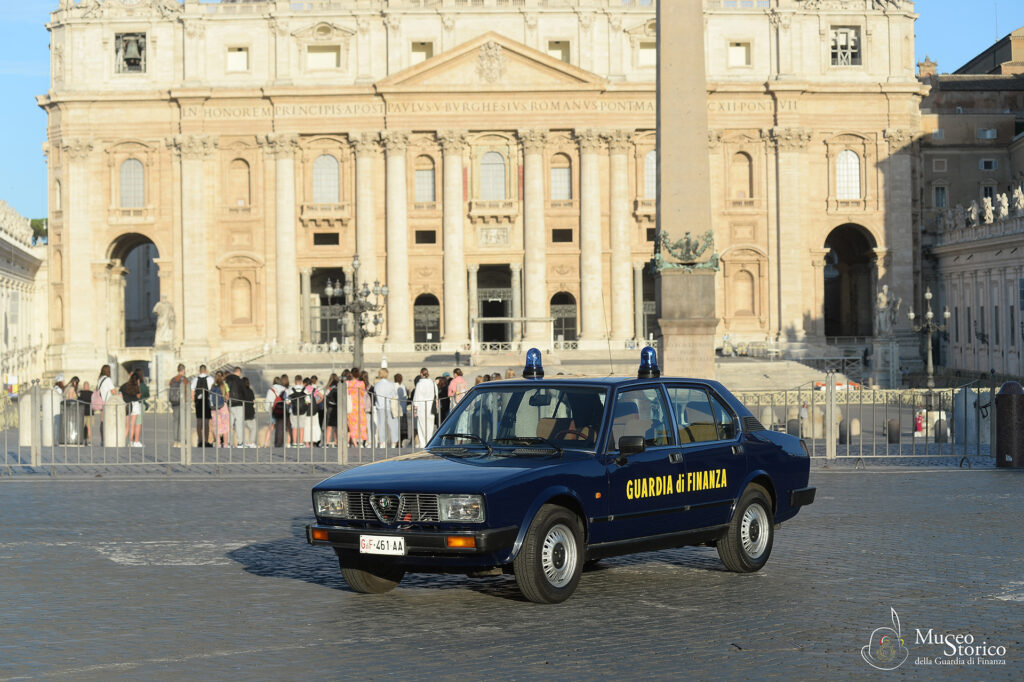
The Historical Museum of the Guardia di Finanza in Rome officially joins the ASI Museums network , the project promoted by the History and Museums Commission of the Italian Historic Automobile Club to enhance and connect museums, collections and institutions dedicated to historic mobility.

With this new addition, the asimusei.it platform surpasses 300 members across the country, offering the public in-depth factsheets, photographs, technical information, and video content dedicated to Italy’s motoring heritage.

A story that began in 1937

The Historical Museum of the Guardia di Finanza was inaugurated in 1937 inside the “Piave” barracks in Rome.

In 1960 it was moved to its current location in Piazza Armellini, in the Nomentano district, to allow for the expansion of the exhibition spaces and accommodate an increasingly rich collection.

The museum tells the story of the Corps through documents, uniforms, memorabilia, and testimonies related to the activities carried out by the Guardia di Finanza throughout Italy’s history.

The origins of the Fiamme Gialle date back to 1774, when the Light Troops Legion was established in Piedmont by order of Vittorio Amedeo III of Savoy.

Eight rooms to tell the story of the Corps

The preserved material is distributed across eight rooms and along wide exhibition corridors.

Specific sections delve into the role of the Guardia di Finanza during the Risorgimento, the First and Second World Wars, the colonial campaigns, the Resistance, and the War of Liberation.

A space is also dedicated to the trophies and awards obtained by the Corps in sporting competitions.

The Museum also includes the Shrine of the Fallen of the Guardia di Finanza and a library specializing in the history of military institutions.

An important documentary heritage

The Museum’s library contains approximately 6,000 volumes , in addition to a fully digitalised photo and video library.

The collection includes over 900 postcards , approximately 53,000 photographs and more than 300 films , materials that document not only the evolution of the Guardia di Finanza, but also numerous passages in Italian history.

A collection of great historical and cultural value, capable of conveying through images and documents the evolution of the Corps and the country.

Over forty vehicles belonging to the Guardia di Finanza

Since 2015, the Museum has also hosted the Collection of Historic Vehicles of the Guardia di Finanza .

The project began with the acquisition of a Fiat 600 and today includes over forty vehicles, all actually used by the Corps during its service.

The collection traces the evolution of the mobility of the Fiamme Gialle, from the birth of the Motorization Service of the Royal Guardia di Finanza in 1935 to the present day.

Cars, motorcycles, and service vehicles thus bear witness to the technical and operational changes that have accompanied the Corps over the decades.

A new piece in the ASI Museums network

The addition of the Guardia di Finanza Historical Museum further expands the national network of ASI Museums, created with the aim of making Italy’s transport history accessible and coordinated.

A system that brings together public museums, private collections, foundations, and associations, contributing to the preservation and promotion of Italian motoring culture.

The Roman Museum’s membership therefore represents a further step in enhancing a collection capable of uniting institutional history, national memory, and the development of mobility.

Bentley Blower No. 1 takes Best in Show at Heveningham

The famous 1929 model triumphs in the 2026 edition of the British competition, among historic cars, motorcycles and vintage aircraft

The 1929 Bentley Blower No. 1 has won the prestigious Best in Show title at the 2026 Heveningham Concours, an annual event that brings together a particularly rich and varied selection of historic cars, motorcycles and aircraft in the Suffolk countryside.

Held at Heveningham Hall, concurrent with the traditional Heveningham Country Fair, the concours offered a journey through nearly 130 years of mobility history. The oldest vehicle in attendance was an 1898 Peugeot Type 15 Double Phaeton, flanked by racing cars, elegant post-war grand tourers, and modern super sports cars.

A selection without borders

One of the distinctive elements of the Heveningham Concours is the variety of vehicles on display.

Among the highlights were Richard Tuthill’s Porsche 911K, flanked by the Tuthill-built Porsche that recently won the Safari Rally Kenya, a preserved 1973 Toyota Land Cruiser FJ40 with just 400 miles on the clock, and a restored 1966 Ferrari 330 GTC that has seen numerous trips between Europe and South America over its history.

There was also great attention from the world of two wheels, represented by the 1978 Suzuki RG500 XR22A belonging to champion Barry Sheene and brought to the event by his son Freddie.

Automobiles and aviation in the same frame

The aeronautical component continues to be one of the most characteristic aspects of the British event.

Two Douglas DC-3s greeted visitors at the entrance to the estate, while air shows complemented the car-themed activities. The traditional Horsepower Hill was also a great opportunity to observe and listen to some of the competition’s protagonists in action.

The best result on the course was achieved by a Porsche Taycan Weissach, capable of reaching 127 miles per hour.

Bentley Blower No. 1 at the top

The international jury, coordinated by Max Hunt, included personalities such as Peter Stevens, Marino Franchitti, Mai Ikuzawa, Roger Bennington, Romulus Rost and Harry Charlesworth.

The cars were judged on historical significance, originality, provenance, build quality, and presentation. Ultimately, the highest honor was awarded to the 1929 Bentley Blower No. 1 .

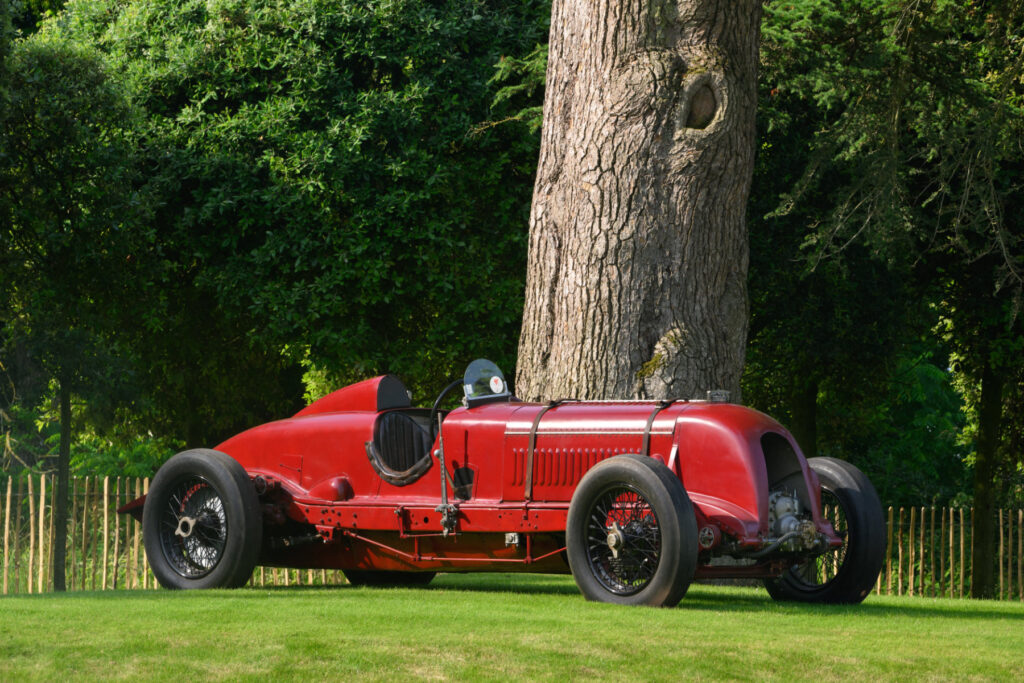
The Blower represents one of the most fascinating chapters in Bentley’s history. Its imposing form, supercharged engine, and deep connection to British racing in the 1920s and 1930s made it one of the most recognizable and celebrated cars of the pre-war era.

All category winners

The class dedicated to pioneer and pre-war cars was won by a 1928 Bugatti Type 37A , while the prize reserved for cars built between 1946 and 1965 was awarded to a rare 1964 ATS 2500 GTS from the Audrain Collection.

Christy Chiltern-Hunt’s 1966 Ferrari 330 GTC won the Post-Modern category, which is awarded to models produced between 1966 and 1999.

Among the supercars and hypercars, the award was given ex aequo to Nick Mason’s 1989 Ferrari F40 and Chris Wilson’s 2008 Bugatti Veyron 16.4 .

The Race & Rally category saw the 1973 Porsche 911 RSR Safari win , while the motorcycle category was won by Freddie Sheene’s Suzuki RG500 XR22A.

Special awards

The Chairman’s Choice was awarded to two very different cars: a 1932 Bentley 8 Litre Saloon , bodied by H.J. Mulliner, and a modern Singer DLS Turbo .

In the aeronautical field, the main trophy went to a 1944 De Havilland DH.89A Dragon Rapide , ahead of a North American P-51D Mustang of the same year.


Nicolò Mazzini

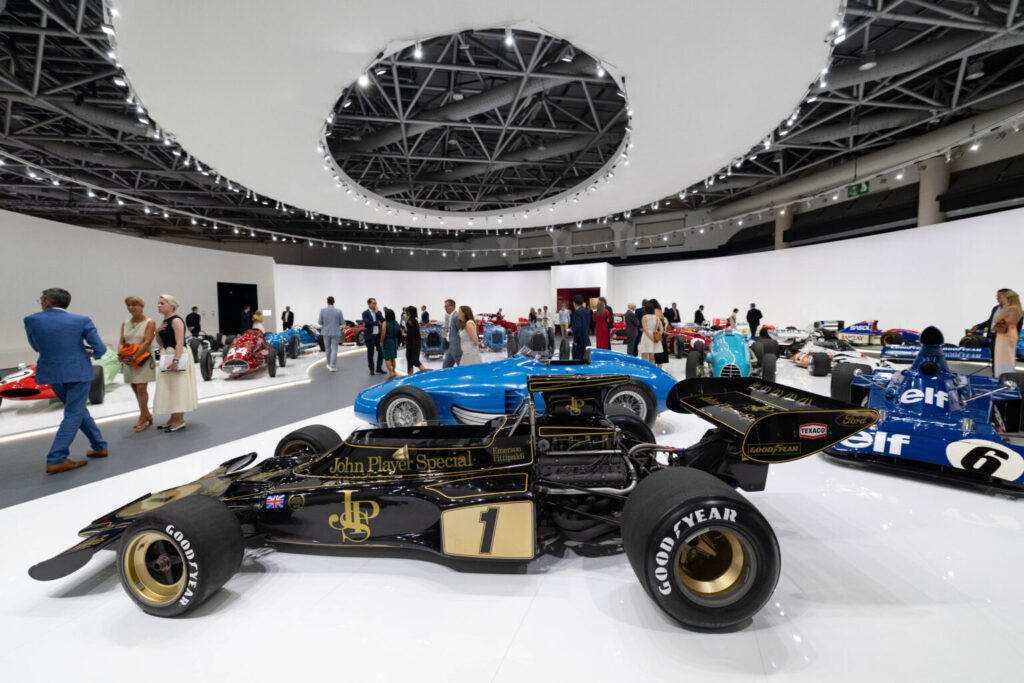
Monaco celebrates over 130 years of automotive history

At the Grimaldi Forum, an exhibition tells the story of the link between the Principality, racing and some of the most important cars in history.

The Principality of Monaco pays tribute to its extraordinary automotive tradition with the exhibition “Monaco & the Automobile, from 1893 to the Present Day” , which can be visited at the Grimaldi Forum until 6 September 2026 .

The exhibition traces over 130 years of history through more than fifty automobiles, single-seaters, and racing cars from prestigious international collections. A journey that intertwines design, technical innovation, lifestyle, and sport, recounting the central role the automobile has played in the Principality’s history.

Monaco and motorsport: a timeless bond

Monaco’s automotive identity is linked above all to two events that have contributed decisively to its international fame: the Rallye Automobile Monte-Carlo , born in 1911, and the Monaco Grand Prix , held for the first time in 1929.

Two profoundly different competitions, but both capable of transforming the Principality’s streets into a laboratory for the development of automotive technology. Over the decades, manufacturers and drivers have tackled winding routes, unpredictable conditions, and extremely challenging street circuits, contributing to the evolution of road and racing cars.

The exhibition, curated by Rodolphe Rapetti and created in collaboration with the Automobile Club de Monaco, takes visitors through different eras, from the first automobiles of the late 19th century to modern rally and Formula 1 cars.

From the elegance of the Principality to great sporting feats

The tour opens with a car deeply linked to the history of the Monegasque royal family: the Rolls-Royce Silver Wraith Four-door Convertible with Hooper bodywork, used by Grace Kelly and Prince Rainier III on the occasion of their wedding on 19 April 1956.

The first part of the exhibition also recounts the birth of concours d’elegance in the Principality, when automobiles gradually began to replace carriages in front of Monte-Carlo’s most prestigious buildings and hotels.

Among the oldest models is also a rare Delahaye Type 58 , which came seventh in the 1912 Monte-Carlo Rally and also won an award in a concours d’elegance the day after the competition.

The queens of the Monte-Carlo Rally

A central part of the exhibition is dedicated to the cars that have written some of the most important pages of the Monte-Carlo Rally.

The route includes the 1964 winning Morris Mini Cooper S with Paddy Hopkirk and Henry Liddon, the Alpine-Renault A110 , the Talbot Sunbeam Lotus , the Renault 5 Turbo driven to success in 1981 by Jean Ragnotti and Jean-Marc Andrié, the Audi Quattro and a more recent Toyota Yaris WRC .

The presence of Italian cars is particularly significant. Among these are the Lancia Fulvia Coupé 1.6 HF number 14, with which Sandro Munari and Mario Mannucci won the 1972 edition, and the Lancia Stratos HF , winner in 1977 with Munari and Piero Sodano Maiga.

Alongside the Lancias, there is also space for the Fiat 124 Abarth Rally , which came second in 1975 with Hannu Mikkola and Jean Todt, the Fiat 131 Abarth, winner in 1980 with Walter Röhrl and Christian Geistdörfer and the Lancia Delta Integrale 16V , protagonist of the success achieved in 1990 by Didier Auriol and Bernard Occelli.

The single-seaters that challenged the streets of Monaco

The story continues with a selection of Grand Prix and Formula 1 cars that raced on the famous Monaco street circuit.

From the Bugatti Type 35 and the Delage 15-S-8, we arrive at the Alfa Romeo 158 “Alfetta” , winner of the 1950 Monaco Grand Prix with Juan Manuel Fangio. Also on display are the Lancia D50 , the Cooper T51, the BRM P57, various Lotuses, McLarens, Matras and Tyrrells.

Among the most representative single-seaters are the Wolf WR1 , driven to success by Jody Scheckter in 1977, and the Ferrari 126 CK , with which Gilles Villeneuve achieved a memorable victory in Monaco in 1981.

The route also includes the Ferrari 640 designed by John Barnard, remembered for the introduction of the semi-automatic gearbox with steering wheel controls, the Benetton B192 linked to Michael Schumacher and the McLaren MP4/8 driven by Ayrton Senna in the 1993 season.

An exhibition between technique, culture and memory

“Monaco & the Automobile” is more than just a collection of exceptional vehicles. Photographs, documents, posters, and period materials allow us to understand how the automobile profoundly influenced the Principality’s identity, image, and culture.

There is also space for the great Monegasque protagonists of motorsport, from Louis Chiron , winner of the Monaco Grand Prix in 1931, to Charles Leclerc , a contemporary symbol of the link between the Principality and Formula 1.

Le Mans Classic Legend 2026: the history of endurance returns as a protagonist on the Circuit de la Sarthe

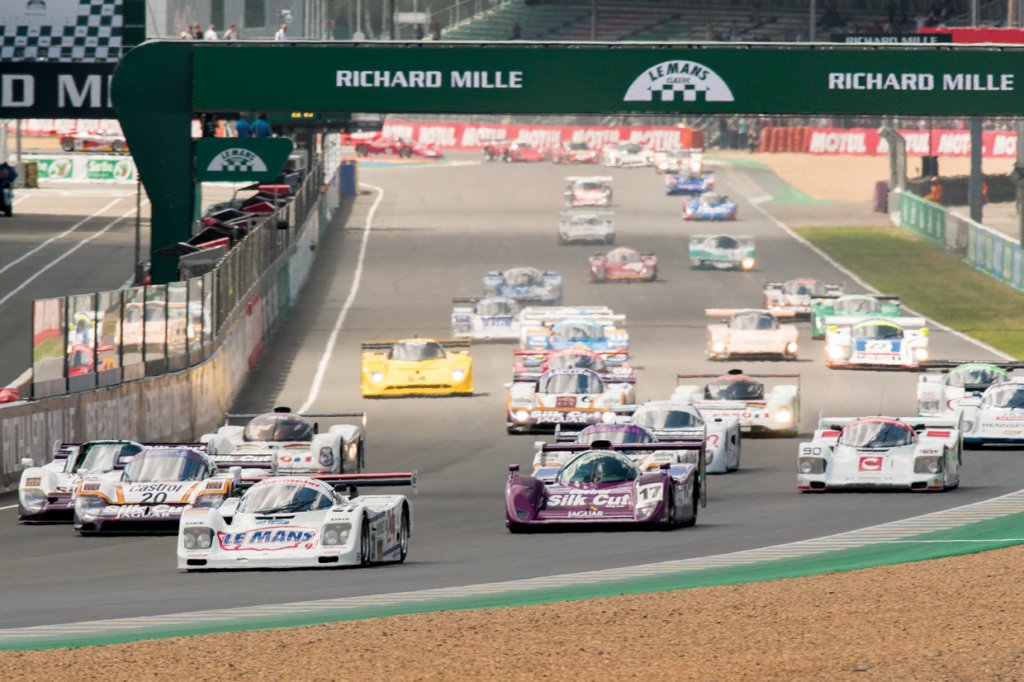
From 2 to 5 July 2026 , the legendary Circuit de la Sarthe will host the first edition of Le Mans Classic Legend , the new event dedicated to the cars that wrote the history of endurance racing between 1976 and 2015.

The event inaugurates the new annual format of Le Mans Classic, which will alternate two distinct events: in even-numbered years, Le Mans Classic Legend will celebrate the most modern racing cars, while in odd-numbered years Le Mans Classic Heritage will bring back to the track cars built between 1923 and 1975.

A formula designed to recount over ninety years of history of the 24 Hours of Le Mans, allowing the public to admire in action cars from profoundly different eras, categories, and technical concepts.

The great protagonists of endurance

Le Mans Classic Legend will bring together some of the most iconic endurance racing cars of recent decades.

The French track will once again feature prototypes, Gran Turismos, and cars from the categories that have shaped the evolution of the 24 Hours of Le Mans: from the spectacular Group Cs of the 1980s and 1990s to the most recent stars of international endurance racing.

The program will include practice sessions, qualifying, races, parades, and on-track demonstrations. Activities will continue into the night, recreating one of the most distinctive and captivating atmospheres of the famous French marathon.

Alongside the main competitions, there will be events dedicated to historic Porsches, Endurance Racing Legends cars, and cars belonging to the clubs present on the circuit.

Gordon Murray guest of honor

One of the most anticipated protagonists of the 2026 edition will be Gordon Murray , chosen as the event’s guest of honor.

One of the most influential engineers and designers in the history of motorsport, Murray has linked his name to some of the most innovative racing and road cars ever built.

Among the most significant results of his career was the success achieved by the McLaren F1 GTR at the 1995 24 Hours of Le Mans , a victory that went down in history as it came on the car’s debut in the French classic.

A special track parade will be held over the weekend featuring some of his most famous creations. Among the cars announced are the McLaren F1, its GTR version, the Brabham BT42, and the McLaren MP4/5B, the single-seater in which Ayrton Senna won the 1990 Formula 1 World Championship.

Also on display will be some of the latest cars produced by Gordon Murray Automotive, including the T.33, T.50 and T.50s Niki Lauda .

A selection of the cars will also be on display inside the village, offering the public the opportunity to retrace the evolution of the British designer’s work.

A festival dedicated to automotive culture

Le Mans Classic is not just a sporting event, but a true festival dedicated to the history and culture of the automobile.

In the paddocks and areas reserved for clubs, it will be possible to admire hundreds of historic cars, meet drivers, collectors and tuners and take a close-up look at cars rarely seen together in the same place.

The program will be completed by exhibitions, parades, concerts, driving simulators and initiatives dedicated to enthusiasts of all ages.

Among the most characteristic events, Little Big Mans will also return , the parade reserved for scale reproductions of the most famous 24 Hours cars, driven by the very young participants on the Bugatti Circuit.

The charm of the Circuit de la Sarthe

The Circuit de la Sarthe remains one of the most iconic and challenging tracks in the world of motorsport.

13.626 kilometers long , it combines permanent sections with sections of road normally open to traffic. High-speed straights, legendary curves, and constant changes of pace have helped build the legend of the 24 Hours of Le Mans since its first edition in 1923.

The first Le Mans Classic took place in 2002, bringing back to the circuit the cars that had participated in the famous French competition during the twentieth century.

With the introduction of the new Legend format, the event now expands its narrative to include the most recent cars, capable of representing the technical, aerodynamic and sporting evolution of endurance racing.

A new chapter for Le Mans Classic

Le Mans Classic Legend 2026 marks the beginning of a new phase for one of the most important events in international historic motorsport.

The decision to make the event an annual event will allow for a more in-depth exploration of the different eras of the 24 Hours of Le Mans, alternating cars from the origins with those from more recent years.

From 2 to 5 July, the Circuit de la Sarthe will once again bring together past and present, celebrating the cars, designers and drivers who have transformed Le Mans into one of the symbolic places in the history of the automobile.

Turin, the capital of European historic motoring with the FIVA European Meeting

From 3 to 5 July, Villa Rey , headquarters of the Automotoclub Storico Italiano in Turin, will host the FIVA European Meeting , an important event dedicated to the discussion between representatives of the European FIVA National Authorities and the board of the International Federation of Historic Vehicles.

The meeting will be attended by delegates from 23 European countries , along with FIVA leaders. The General Committee, composed of the President, Vice Presidents, and the heads of the Federation’s various Commissions, will also meet on the same days.

The prospects of historic vehicles in Europe

The European Meeting will officially begin at 3:00 pm on Saturday 4 July with a speech by FIVA President Alberto Scuro , who will present the objectives, priorities and expectations of the Turin meeting.

The first session will focus on legislative challenges and future prospects for classic vehicles in Europe. The topic will be introduced by Lars Genild , FIVA Vice President Legislation, and Gabriel Lecumberri of EPPA.

The discussion will aim to identify the main priorities and awareness-raising initiatives needed to protect and promote historic motoring heritage within an ever-evolving regulatory framework.

Topics covered include current legislative and regulatory developments, environmental policies, sustainability, and the role that historic vehicles can continue to play in future mobility.

Particular attention will also be paid to new challenges, opportunities, and protection strategies, through a comparison of different national experiences. Federation representatives will share emerging risks, successful initiatives, and areas where coordinated action at the European level could be particularly effective.

Strengthening collaboration between FIVA and National Federations

Another key moment of the meeting will be the speech by Nataša G. Jerina , Senior Vice President for Internal Affairs, entitled “Strengthening FIVA and its National Federations: Building the Future Together”.

The session will be dedicated to gathering proposals and identifying the priorities needed to improve cooperation between the International Federation and individual national entities.

The discussion will focus specifically on the services offered, internal communications, member engagement, and the development of an increasingly cohesive and effective network for protecting the culture and history of vintage vehicles.

The conclusion at the Stellantis Heritage Hub

The conclusions of the FIVA European Meeting will be presented on Sunday 5 July, at the end of the visit to the ASI Bertone Collection , housed at the Stellantis Heritage Hub in Turin.

The final day will also include a conference with several former Bertone designers, offering participants a further opportunity to delve into the history of Italian automotive design and the legacy left by one of the most important coachbuilders of the twentieth century.

The Turin meeting will thus represent an important opportunity for international dialogue on the future of historic motorsport, the strategies needed to protect it, and the role of Federations in preserving its cultural, technical, and social value.

ASI Tricolore Circuit: discovering Abruzzo: culture, nature, and traditions are the stars of the Grand Tour

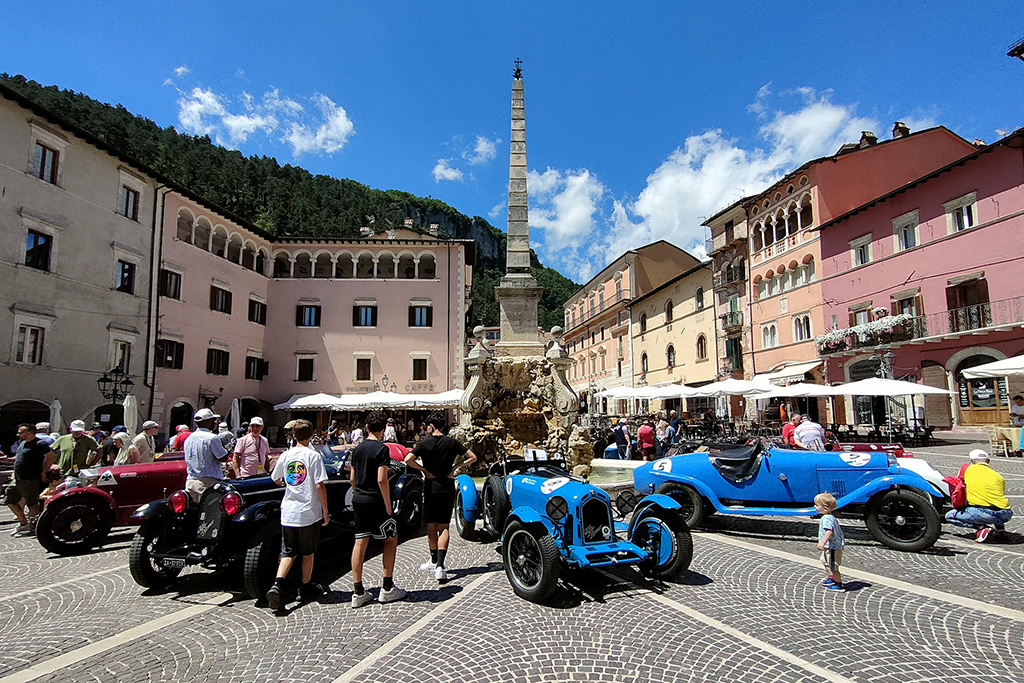
The ASI Tricolore Circuit continues its journey along the Peninsula with a new edition of the Abruzzo Gran Tour , scheduled from Wednesday 1st to Sunday 5th July.

The event will bring classic cars and crews to discover some of the most authentic places in Central Italy, combining automotive passion, culture, landscape, and local heritage. This special occasion will also pay homage to L’Aquila, the 2026 Italian Capital of Culture .

The ASI Circuito Tricolore project offers a dynamic form of historic motoring, linked to slow tourism and the discovery of the lesser-known vocations of Italy’s various regions. A respectful and conscious way to experience historic automobiles, capable of taking participants away from the destinations most affected by mass tourism.

After the events organized on the roads of Emilia-Romagna, Tuscany, Puglia, Sicily, Piedmont, and Veneto, the spotlight will now be on Abruzzo and its natural, artistic, and cultural beauties.

A journey into the heart of Abruzzo

The event, organized by the Abruzzo Drivers Club , a member of ASI, offers a program designed for travel and vintage car enthusiasts.

The headquarters will once again be the city of Avezzano , the starting point of the itineraries that will pass through villages, natural parks and panoramic roads.

The first stage will take the crews to L’Aquila, along a route of approximately 140 kilometers that will pass through Raiano, the Svolte di Popoli, Navelli, and Rocca Calascio . The arrival in the Abruzzo capital will be one of the event’s key moments and will be a tribute to its role as Italian Capital of Culture 2026.

On Thursday 2 July, a new itinerary of approximately 140 kilometres will be tackled, with passages in Fonte Cerreto, Castel del Monte and Santo Stefano di Sessanio , a charming village in the Gran Sasso National Park listed among the Most Beautiful Villages in Italy.

The day will also include a visit to the Guardia di Finanza Inspectors and Superintendents School in L’Aquila . For the occasion, the School’s Historical Museum will host a special exhibition featuring five historic automobiles.

The program will continue with the return to L’Aquila and the re-enactment of the Pietro Cidonio Grand Prix , along the streets of the historic Collemaggio Circuit.

Villages, landscapes and automotive history

On Friday, July 3, the caravan will return to Avezzano, passing through other particularly representative locations of the Abruzzo region.

The route will touch Rocca di Mezzo , in the Sirente-Velino Regional Park, Gagliano Aterno and Aielli , also known as “Borgo Universo” thanks to its murals, artistic installations and shops that have transformed the town into a true open-air museum.

After about 120 kilometers, the stage will conclude with a parade of historic cars through the streets of downtown Avezzano.

On Saturday, July 4th, the Abruzzo Gran Tour will experience its final day on the road. The teams will reach Collalto Sabino, Lake Turano, and Carsoli , alternating driving with stops and visits dedicated to exploring the area.

There will also be space for sporting history with the re-enactment of the Micangeli Trophy , a hillclimb time trial held in the 1950s up the Pietracquaria climb.

The day will end with the Gran Gala Città di Avezzano and the new Concorso d’Eleganza named after Pietro Di Lorenzo , dedicated to the beauty, conservation and historical value of the participating cars.

An event with an international scope

The awards ceremony on Sunday, July 5th will close an event that continues to attract growing interest even beyond Italy’s borders.

The international dimension of the event will be demonstrated by the twinning with the Japanese Himeji Cup , thanks to which four crews from Japan will also participate in the Abruzzo Gran Tour.

The Abruzzo Gran Tour thus confirms its status as an event capable of describing the region through the allure of vintage cars, transforming every route into a journey through culture, traditions, nature, and passion.