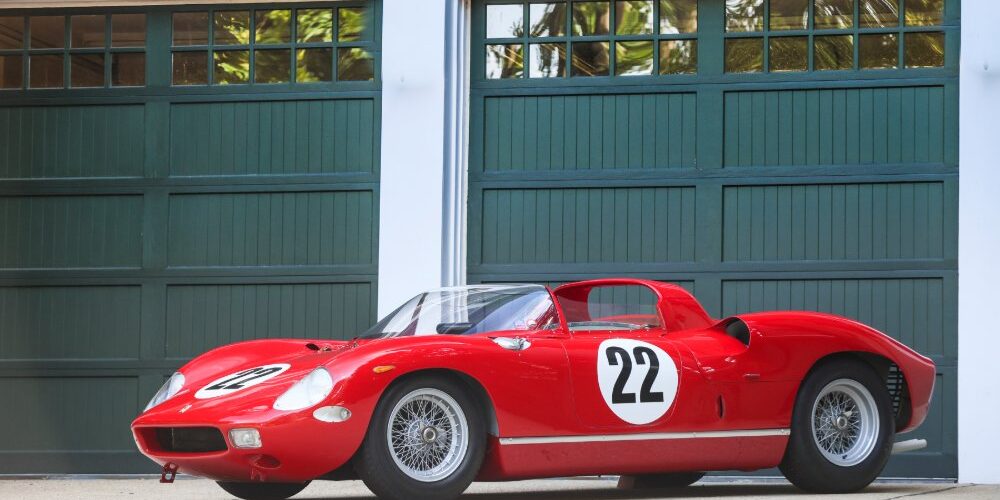
A Ferrari 250 P will be the star of Christie’s Gooding auction at Pebble Beach

A selection of extraordinary Italian racing cars will be among the highlights of Gooding Christie’s upcoming Pebble Beach auction . Leading the field will be the Ferrari 250 P, chassis 0810 , the first example of the P series and the first Ferrari sports prototype with a mid-engined V12.

The car made its debut at Monza and was subsequently fielded directly by Scuderia Ferrari during the 1963 season. At the 12 Hours of Sebring , entrusted to Willy Mairesse, Lorenzo Bandini and Nino Vaccarella, it took second place overall. In the same year, Mike Parkes and Umberto Maglioli took it to the third step of the podium at the 24 Hours of Le Mans .

In the following years, the 250 P raced with Luigi Chinetti’s North American Racing Team and William McKelvy’s Scuderia Bear, participating in some of the most important races of the period, including Sebring, Le Mans, Bridgehampton, Mosport, and Nassau. Preserved in the current collection since 1988, it is offered with an estimate of between $15 and $20 million .

Ferrari 250 GT SWB Berlinetta Competizione

Among the cars announced is a 1961 Ferrari 250 GT SWB Berlinetta Competizione , chassis 2701 GT, valued between $8 million and $10 million .

This is one of only twenty cars built in the Comp/61 configuration, also known as the “SEFAC Hot Rod” , the maximum racing evolution of the famous short wheelbase berlinetta.

The Ferrari made its first public appearance during the 1961 Le Mans tests, where Mike Parkes, Fernand Tavano, and Jo Schlesser achieved the fastest time among the GT cars. During its career, it also took part in the 1967 Targa Florio and, subsequently, in numerous international historic events, including the Tour Auto, Goodwood Revival, Le Mans Classic, and Monterey Historics.

Ferrari Dino 206 S Berlinetta

The catalog also includes a 1966 Ferrari Dino 206 S Berlinetta , chassis 014, estimated between $3.5 and $5 million .

It is the last of three berlinettas built among the eighteen total examples of the Dino 206 S. The closed body, designed and built by Piero Drogo, makes this car particularly rare.

Originally delivered to the North American Racing Team, it debuted at the 1966 24 Hours of Le Mans with Mario Casoni and Nino Vaccarella. It subsequently competed in numerous international races, including Can-Am, Sebring, Reims, Watkins Glen, and Daytona.

Its most significant result came at the 1969 12 Hours of Sebring, finishing ninth overall and second in the prototype class for up to two liters. The car retains its original matching-numbers V6 engine and has been in the same North American collection since 1987.

Maserati Tipo 61 Birdcage

There will also be space for the Maserati Tipo 61 Birdcage chassis 2452 , the first production example of the model and one of only seventeen cars built.

Between December 1959 and early 1963, she participated in over fifty competitions, mostly in the United States. Bob Drake gave her her first overall victory at Palm Springs in January 1960, followed by further successes in Phoenix and Santa Barbara.

The Birdcage was also driven by drivers such as Jim Hall, Bill Krause, and Ken Miles. In 1962, Krause scored five consecutive victories, winning at Oakland, Pomona, Santa Barbara, and Reno.

The Maserati is expected to be valued between $3 and $4 million .

Ferrari 225 Sport “Tuboscocca” Spider

Rounding out the selection will be a 1952 Ferrari 225 Sport “Tuboscocca” Spider , chassis 0194 ET, estimated at $2 million to $3 million .

The car is one of six 225 Sport Spiders built around the unique tubular structure developed by Ferrari. The Vignale body was designed by Giovanni Michelotti.

Its debut took place at the 1952 Mille Miglia , driven by Piero Scotti and Giulio Cantini. It was subsequently passed to American driver Tom Cole, who used it at the Targa Florio, the Coppa d’Oro delle Dolomiti, the Daily Mail International Trophy, and the 9 Hours of Goodwood.

It was at Goodwood that Cole and Graham Whitehead took second place overall, a result they repeated shortly thereafter in the Bari Grand Prix. Ferrari still retains its original matching-numbers engine today.

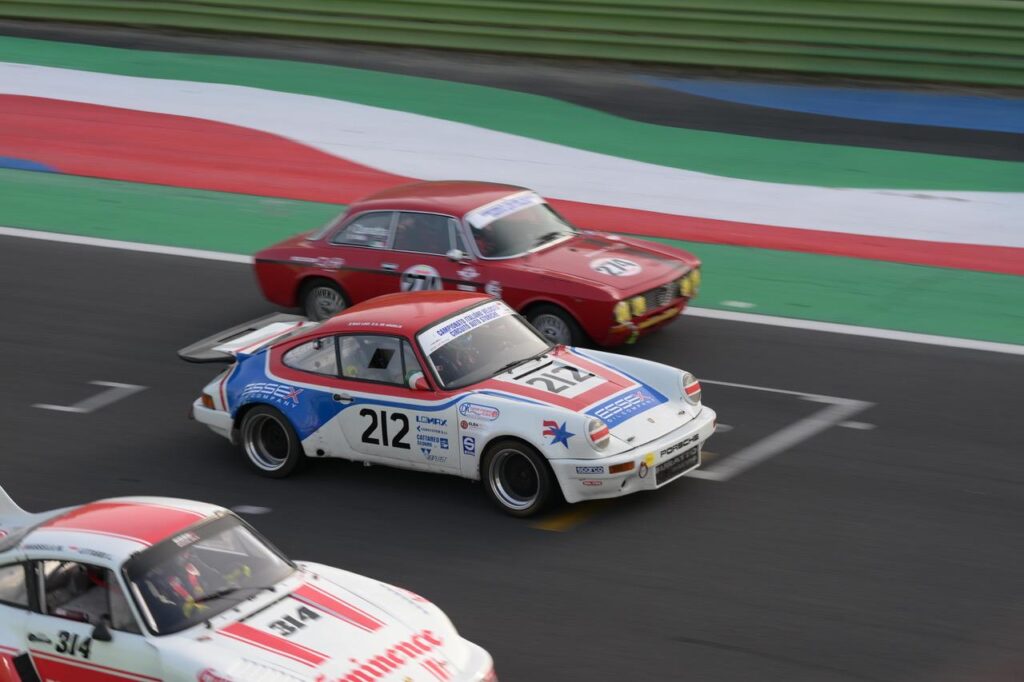
 

Historic cars at Vallelunga: verdicts and spectacle in the fourth round of the CIVCA

The Piero Taruffi racetrack in Vallelunga hosted the fourth seasonal round of the Italian Historic Car Circuit Speed ​​Championship , alongside the second round of the Formula Historic Championship .

An intense day, characterized by hard-fought battles, penalties, and numerous position changes, which decreed the winners of the various divisions and groups competing.

Lodi and De Angelis on the podium in the 2nd Group

In the 1st Division test , reserved for cars belonging to the 1st and 2nd Groups, the overall victory of the 1st Group went to Riccardo and Alessandro Raimondi, protagonists at the wheel of the Jaguar E-Type of the Circolo della Biella.

Behind them were Roberto Gentili, in the BMW 2002 Ti of the Race Project Team, and the Morris Cooper S entrusted to Francesco Ramacciotti and Daniele Cappellari.

In Group 2, Francesco and Cosimo Turizio took the win in their Porsche Carrera RS, returning to the top step of the podium with their third win of the season.

Second place went to Massimo Lupoli and Goffredo Pirro, also at the wheel of a Porsche Carrera RS, while Massimiliano Lodi and Alessio De Angelis took third place with the Porsche 911 3.0 , completing a complex and hard-fought race in the podium zone.

Ronconi and Sala win in the 2nd Division

The 2nd Division race rewarded Massimo Ronconi and Mario Sala, winners in the Porsche 935 of the Club 91 Squadra Corse.

Walter Wuhrer and Fabio Benedetti finished second in the Porsche 911, after receiving a penalty for overtaking under the safety car.

Gabriele Crocchini, driving the Alfa Romeo Alfasud 1500, took third place on the podium. His result was also affected by a penalty, issued for failing to follow the procedures established during the driver change window.

Lent ahead of everyone in the 4th Group

In Group 4, victory went to Massimiliano Quaresima, protagonist with the Maserati Biturbo prepared by Chimera Classic Motor.

Second place went to Domenico Terron and Santi De Filippis in the TVR Tuscan Speed ​​8 GT, penalized following contact with Quaresima’s car.

Enrico Gerardi and Maurizio Sardellitti completed the podium with the Lento Team Ford Sierra Cosworth.

Ferrari and Famà are the stars of the historic single-seaters

The Vallelunga weekend also hosted the second round of the Formula Historic Championship .

In Race 1, Carlo Ferrari took the win in the Dallara 2000, ahead of Antonino Famà, who was penalized 25 seconds for exceeding the speed limit in the pit lane. Matteo Aralla took third place in the 1998 Reynard.

Famà redeemed himself in Race 2, winning at the wheel of his Dallara ahead of Carlo Ferrari and Matteo Aralla, who were once again on the podium at the end of an action-packed weekend.


2026 Campagnolo Historic Rally: Battistolli and Scattolin return to the top step

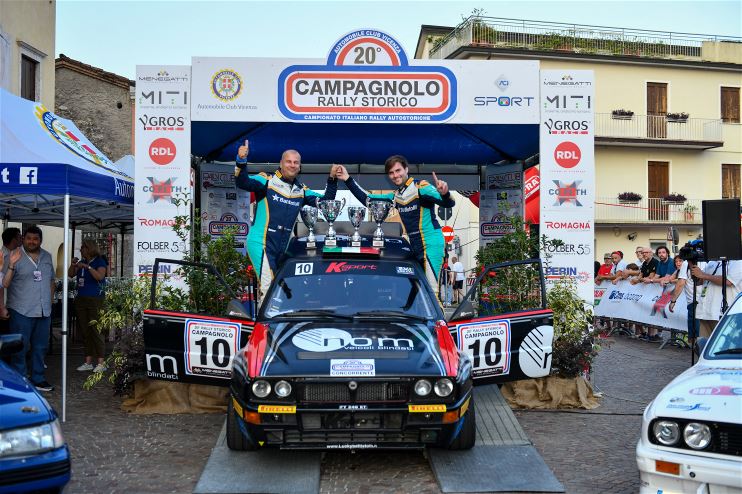
Alberto Battistolli and Simone Scattolin won the twentieth edition of the Campagnolo Historic Rally , the sixth round of the 2026 Italian Historic Car Rally Championship .

The crew from Vicenza took the Lancia Delta HF Integrale prepared by K-Sport and fielded by Team Bassano to success, also taking first place in the 4th Group classification .

For Battistolli, competing this season in the Italian Gravel Rally Championship, this was a successful return to classic cars and his home race. He had already triumphed at the Campagnolo in 2019, driving a Lancia Rally 037.

Battistolli sets the pace

The victory came at the end of a hard-fought race, in which Battistolli and Scattolin were able to maintain a constant pace and limit errors.

The main contenders for the win were Matteo Luise and Melissa Ferro , competing in the BMW M3. However, an error in the early stages and a penalty for jumping the start on the seventh special stage affected their performance, preventing the battle for first place from developing fully.

Luise finished the race in third position, after being overtaken in the last special stage by Andrea Smiderle and Gianni Marchi .

Smiderle takes second place in the final

At the wheel of the Subaru Legacy , Smiderle and Marchi drove a consistently improving performance. The crew tackled the final special stage aiming for second place, managing to overtake Luise by just 2.4 seconds.

The podium was thus entirely occupied by cars from the 4th Group and by crews from Team Bassano , a result that further strengthens the position of the Venetian team in the seasonal standings.

Battistolli and Scattolin finished with a total time of 1 hour, 3 minutes and 30.8 seconds , ahead of Smiderle and Marchi by 35.7 seconds and Luise and Ferro by 38.1.

Tezza at the foot of the podium

Fourth place overall went to Denis Tezza and Massimo Merzari , who drove a consistent race in the BMW M3.

Despite being more than three minutes behind the leader, the Veronese crew avoided errors and technical problems, making up for the retirement they suffered in the previous edition.

Fifth place went to German Jurgen Geist , alongside Czech navigator Josef Kral in a BMW M3, followed by Giovanni Mori and Michele Frosini , also at the wheel of the Bavarian car.

The Renault 5 GT Turbo of Cristian Gilardoni and Angela Diener finished in seventh place.

Delle Coste wins the 2nd Group

Eighth place overall allowed Luca Delle Coste and Giuliano Santi to take victory in Group 2 with the Rally & Co. Ford Escort RS MKI.

The victory came after the retirement of Alberto Salvini and Davide Tagliaferri , who were occupying fourth position overall and were authoritatively leading the group before being stopped by a problem with the Porsche 911 RS during the transfer to the seventh stage.

The top ten was completed by Sandro Costaganna and Matteo Rizzi , ninth in the Lancia Delta Integrale, and by Giorgio Costenaro and Roberta Barbieri , tenth in the Ford Sierra Cosworth.

A race marked by retirements

Numerous technical problems affected the Vicenza event.

The winners of the 2025 edition, Adriano Lovisetto and Cristian Cracco , had to abandon the race on the fifth special stage due to a failure of their BMW M3.

Davide Negri and Marco Zegna also retired , stopped by mechanical problems with the Porsche 911 RS, and Enrico Volpato and Samuele Sordelli , unable to reach the first stage after the Ford Escort RS MKII stopped during the transfer.

The Ford Sierra Cosworth of Gabriele Rossi and Fabrizio Handel was slowed down by electrical problems in the opening stage, before finally retiring.

Lanfranchini and Smithson win in their respective groups

In the 3rd Group, victory went to Simone Lanfranchini and Alessandro Merlo , protagonists with the Rally & Co Porsche 924 GTS and classified just outside the top ten overall.

Group 1 was won by Trevor Smithson and Christian Soriani , who took their Lotus Elan 26/R to the finish line.

Among the Classic cars, Riccardo Mariotti and Giuseppe Tricoli took the lead , finally winning with the Ford Escort Cosworth prepared by Terrosi for the Scuderia Proracing.

An important result also for Elena Gecchele and Giulia Dai Fiori , who with the Fiat 124 Abarth of Team Bassano have strengthened their leadership in the CIRAS women’s rankings.

Morino wins the A112 Abarth Trophy

A bitter end to the A112 Abarth Trophy for Riccardo Pellizzari and Christian Ronzani, forced to retire due to an engine problem during the final special stage when they were leading.

Victory thus went to Marcello Morino and Massimo Barrera , first with an 8.5-second advantage. Third place went to Lorenzo Bergamaschi and Flavio Sella , slowed by gearbox problems.

After the Rally Storico Campagnolo, the Italian Historic Car Rally Championship will return from 24 to 26 September with the Rallye Elba Storico , one of the most eagerly awaited events of the season.


2026 Coppa d’Oro delle Dolomiti: Fontanella and Scarabelli triumph in the Lancia Lambda

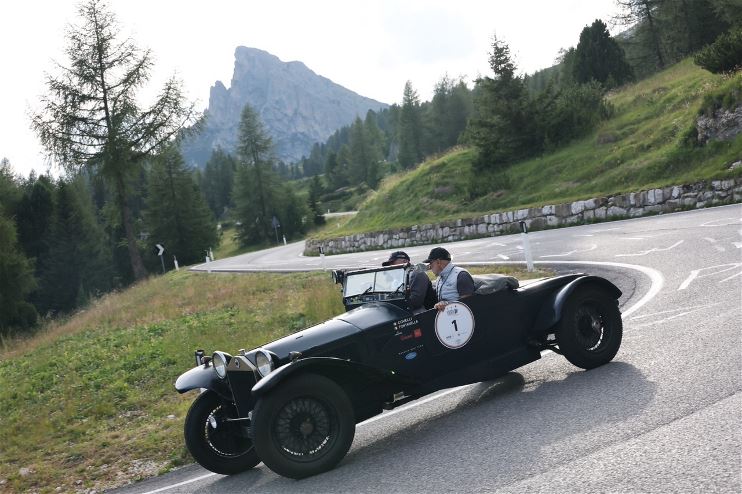
The 2026 Coppa d’Oro delle Dolomiti crowned Gianmario Fontanella and Giovanni Scarabelli , winners at the wheel of the prestigious 1927 Lancia Lambda Spider Casaro .

The event, the third round of the Italian Grandi Eventi Championship , brought fifty historic and modern cars to the roads between Cortina d’Ampezzo and the Belluno Dolomites , competing in a challenge based on precision in time trials and average speeds. An event that once again combined competition, elegance, and the valorization of the Dolomites.

A victory built test after test

Fontanella and Scarabelli drove an extremely consistent race, finishing with 370.84 penalties . The crew handled even the most challenging sections with great precision, managing their large car through the hairpin bends and mountain passes.

The success came at the end of a long battle with Francesco and Giuseppe Di Pietra , champions of the 2025 edition and main rivals for the overall victory.

The turning point came during the second stage, when their Fiat 508 C suffered altitude-related carburetion problems. The Franciacorta Motori drivers were forced to make a difficult comeback, managing to close the gap on the final day, but failing to catch the winners’ Lancia Lambda.

Di Pietra second, Passanante completes the podium

Francesco and Giuseppe Di Pietra finished in second place overall , with a gap of 92.84 penalties, still taking victory in the RC2 category and consolidating their leadership in the championship.

Mario Passanante and Riccardo Riboldi , also in a Fiat 508 C, took third place on the podium. After the difficulties encountered in the average speed tests, the crew recovered ground thanks to a particularly effective performance in the tests held on the pressure switches.

Fourth overall position for Osvaldo and Andrea Peli , in the 1934 Fiat 508 C Coppa Oro, while Carlo Beccalossi and Marzia Marchioni completed the top five with another Lancia Lambda Spider Casaro.

The winners of the different categories

Success in the RC4 group and the Power Stage Classic went to Roberto Crugnola and Darren Morcombe , driving a 1971 Lancia Fulvia HF 1.6.

Sixth overall position and third place in the RC1 category for Alessandro Gamberini and Andrea Camosci , in a 1930 Fiat 514 MM.

The RC3 category was won by the brothers Celestino and Oreste Sangiovanni , seventh overall in a 1959 Porsche 356 A. Behind them were Alessandro Virdis and Silvia Giordo , also in a Porsche 356 A.

Among the younger crews , Michele Vecchi and Federico Forzi stood out , winning the Under 30 category at the wheel of a 1951 Lancia Appia C10 S.

From Legend to the modern Tribute

The Legend cars classification rewarded Riccardo Roversi and Sara Miglioli , winners with a 1978 Mercedes-Benz SL 450.

Second place went to Dario Converso and Federica Ameglio , in a 1972 Innocenti Mini Cooper, while in the women’s rankings Vania Parolaro and Ornella Pietropaolo took the lead with a 1996 Porsche 993 4S.

Among the modern cars of the Coppa d’Oro delle Dolomiti Tributo , first place went to Gianantonio and Edoardo Gasparini , protagonists with a Ferrari 296 GTS.

The Alfa Romeo 6C wins the Concours d’Elegance

Alongside the sporting competition, the event also celebrated the charm and history of the participating cars through the traditional Concorso d’Eleganza .

The main award was given to the 1931 Alfa Romeo 6C 1750 Gran Sport Spider Aprile driven by Corrado Lopresto and Elena Maggiore .

Also on the podium were the 1938 BMW 328 Roadster of the Argentine crew of Luis Angel Zerbini De La Iglesia and Silvia Susana and the 1939 Lagonda Rapide Drophead Coupé of the Germans Eberhard Thiesen and Svenja Radolf.

The Coppa d’Oro delle Dolomiti concluded with the parade of the crews along Corso Italia in Cortina d’Ampezzo , sealing an edition capable of bringing together sport, landscape and some of the most fascinating cars in history.


Abruzzo Gran Tour 2026: classic cars, culture, and landscapes in the heart of the Apennines

The fifth edition of the Abruzzo Gran Tour concluded, confirming the value of an event capable of combining the allure of historic automobiles with the valorization of the region’s landscape and cultural heritage.

From 1 to 5 July 2026 , 62 crews from different countries covered approximately 700 kilometres through some of the most evocative locations in Abruzzo, transforming streets, squares and villages into a great event dedicated to vintage motoring.

An increasingly international event

Among the most significant elements of the 2026 edition is the official twinning with the Himeji Cup , an important Japanese event reserved for historic cars.

The agreement has encouraged the participation of a group of collectors from Japan, further strengthening the international character of the Abruzzo Grand Tour and creating a new bond between two entities united by a passion for automotive history.

An itinerary through villages and cities of art

The route took the crews from Avezzano to L’Aquila , passing through towns such as Navelli, Rocca Calascio, Santo Stefano di Sessanio, Gagliano Aterno and Aielli, without forgetting the spectacular scenery of the Gran Sasso.

In addition to the automotive component, the program included several cultural events. These included a visit to the MuNDA – National Museum of Abruzzo , in the year L’Aquila was the Italian Capital of Culture, and the reenactment of the Pietro Cidonio Grand Prix along the Collemaggio circuit.

A travelling collection

The protagonists of the event were cars built between 1922 and 1969 , capable of recounting almost half a century of technical, stylistic and sporting evolution.

Among the most admired examples were a rare 1922 Alfa Romeo RL TF , Alfa Romeo 8C Monza and 6C, Giulietta Spider, Bugatti Type 37A, several Bentleys from the 1920s and 1930s and numerous Jaguar XKs and E-Types.

There was also no shortage of prestigious cars by Mercedes-Benz, Lancia, Talbot, Lagonda, Porsche, Devin and Osca Maserati, transforming the entire itinerary into a true open-air museum.

The Concorso d’Eleganza closes the event

The 2026 edition concluded with the Grand Gala and the “Pietro Di Lorenzo” Concours d’Elegance , hosted in the setting of Piazza Risorgimento.

The top award went to Aza and Alexander Cholis , a Greek crew driving a Jaguar XK150. The car was chosen by both the jury and the public, becoming the symbol of an edition that once again celebrated the intersection of classic cars, culture, and territory.


The Coppa d’Oro delle Dolomiti returns to the streets of Cortina d’Ampezzo

From 15 to 18 July 2026, Cortina d’Ampezzo and the spectacular roads of the Dolomites will once again host the Coppa d’Oro delle Dolomiti , one of the most prestigious events dedicated to regularity for historic cars.

The event is part of the Italian Grandi Eventi ACI Sport Epoca Championship , while the parallel Tributo Coppa d’Oro delle Dolomiti is included in the Italian Grandi Eventi Championship reserved for modern cars.

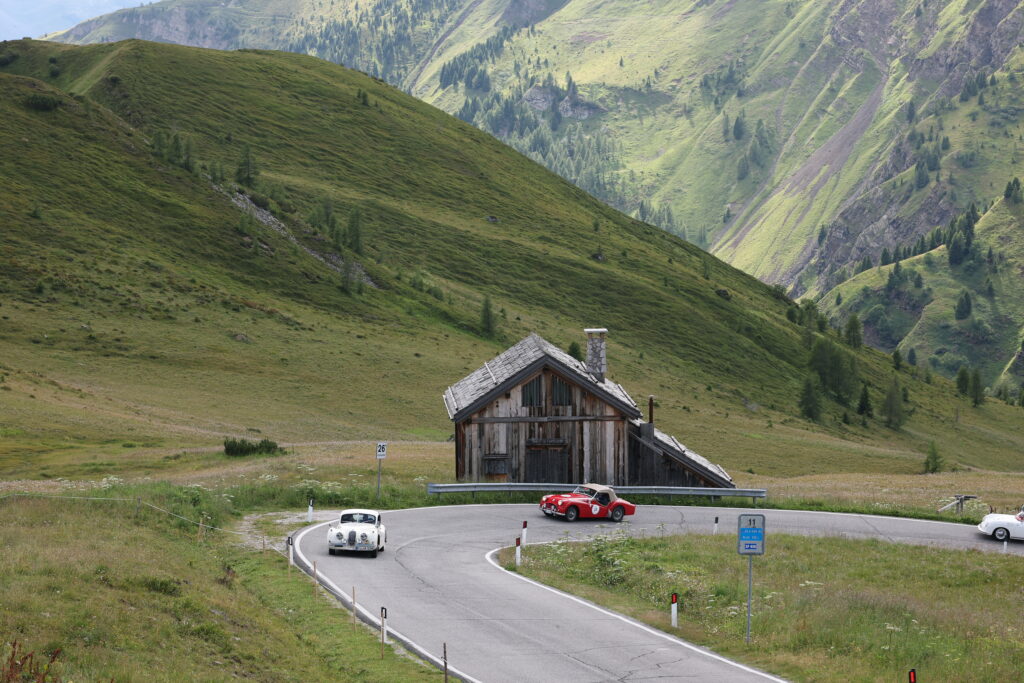
Not just a parade of glamorous automobiles, but a challenging and selective competition, in which the crews will face numerous time trials along some of the most famous Alpine passes. These include the Falzarego and Giau passes, which already featured in the 1956 and 2026 Winter Olympics.

Fifty cars and three different classifications

There will be around fifty cars at the start, racing along the roads of the Ampezzo Dolomites, the province of Belluno and Trentino.

Participants are expected to include key figures from the Italian Major Events Championship, including current standings leaders Francesco and Giuseppe Di Pietra. Driving their 1938 Fiat 508 C, representing Franciacorta Motori, they will attempt to build on their success in the previous edition.

The event will also have a strong international presence, with crews coming from several countries, including Argentina and Australia.

There are three categories:

  • Coppa d’Oro delle Dolomiti , reserved for cars built up to 1971;
  • Coppa d’Oro delle Dolomiti Legend , dedicated to cars produced from 1972 to 2000;
  • Coppa d’Oro delle Dolomiti Tribute , open to road GT cars built from 2001 onwards.

Three stages for over 500 kilometers

The program includes three days of racing, from Thursday to Saturday, for a total route of 523 kilometers .

The event will open with a 65-kilometer prologue. The second stage, scheduled for Friday, will be the longest at 248 kilometers, while the crews will tackle the final 210 kilometers on Saturday, July 18th.

The final day will also include a stop in Belluno, in Piazza dei Martiri, in front of the Automobile Club headquarters, before returning to Cortina d’Ampezzo. The finish line and final parade will take place in Corso Italia, in the heart of the Cortina d’Ampezzo town.

A challenge among the great Dolomite passes

From the prologue, competitors will be challenged to tackle the first mountain passes. The second day will traverse some of the most evocative scenery in the Dolomites, passing through Falzarego, Pordoi, San Pellegrino, Valles, Rolle, Cereda, Aurine, Duran, Staulanza, and several Alpine passes.

In the third and final stage, the Giau Pass and Nevegal will be the backdrop for the decisive tests.

Amidst UNESCO World Heritage landscapes, historic cars, and challenges fought to the nearest hundredth of a second, the Coppa d’Oro delle Dolomiti is preparing to renew one of the most fascinating traditions of Italian classic motoring.


The three Ford GT40s from the 1966 Le Mans podium are back together again

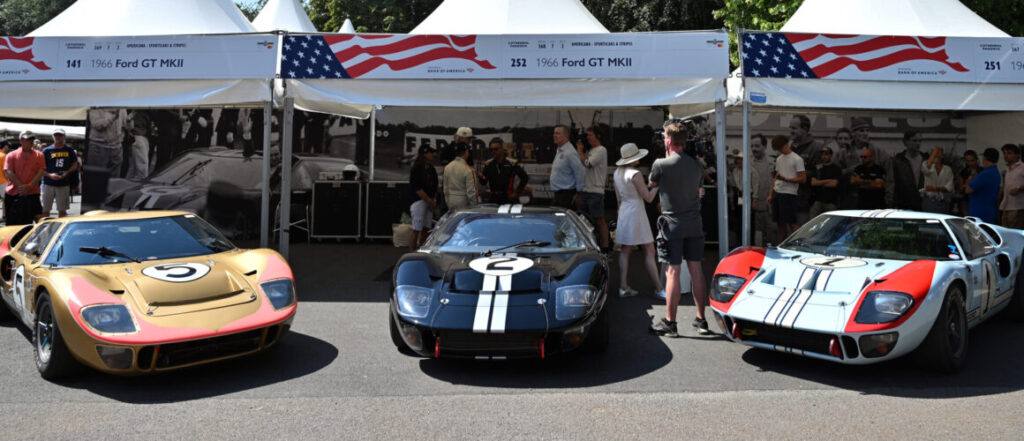
The three Ford GT40s that took part in the historic one-two finish at the 1966 24 Hours of Le Mans have been brought together under a single ownership for the first time in modern times.

The Miller Family Automobile Foundation has acquired GT40 chassis number P/1046 , the overall winner of the famous French race driven by Bruce McLaren and Chris Amon . The foundation already owned the other two cars that finished on the podium that year, P/1015 and P/1016, which finished second and third, respectively.

The victory that ended Ferrari’s dominance

The 1966 victory represented one of the most important moments in Ford’s racing history. The American manufacturer succeeded in breaking the dominance of Ferrari, which had won six consecutive editions of the 24 Hours of Le Mans.

The race concluded with Ford’s famous and controversial parade down the home straight. McLaren and Amon’s P/1046 crossed the finish line alongside Ken Miles and Denny Hulme ‘s P/1015 , creating an image that would go down in motorsport history.

At first, it looked like Miles would win, but the stewards awarded the win to McLaren and Amon. Their car had started further back on the grid and had therefore covered a slightly greater distance over the 24-hour period.

Completing the podium were Ronnie Bucknum and Dick Hutcherson , third behind the wheel of GT40 P/1016.

A reunited sporting heritage

The acquisition of P/1046 allows the Miller Family Automobile Foundation to preserve all three cars from the legendary Ford trifecta.

According to Greg Miller, the GT40 reunion represents an extraordinary opportunity to preserve and tell the story of one of the most significant chapters in racing history. The car’s previous owner, Rob Kauffman, also cited the foundation as the ideal organization to entrust the car’s future.

The return together at Goodwood

The three Ford GT40s made their first public appearance together at the 2026 Goodwood Festival of Speed .

The trio will also return to the spotlight in September at the Goodwood Revival , offering enthusiasts a new opportunity to see together the cars that sixty years ago gave Ford one of the most famous victories in its sporting history.


A Jaguar C-Type wins Best in Show at the 2026 Royal Automobile Club Concours

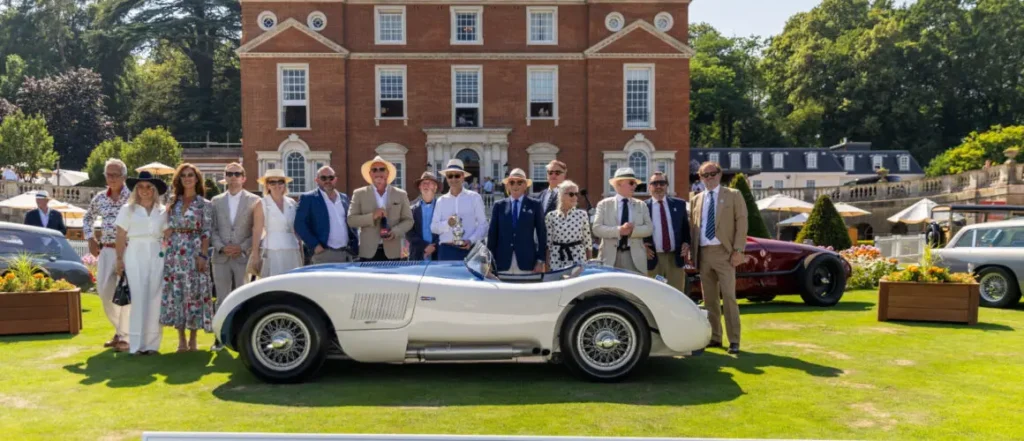
1953 Jaguar C-Type was the overall winner of the second Royal Automobile Club Concours , held at the prestigious Woodcote Park in Surrey.

Following the success of the inaugural edition, the British event once again brought together some of the most important collector’s cars and motorcycles, divided into seven thematic categories. The winners were chosen by a jury composed of leading figures from the automotive world, including Ian Callum , Peter Stevens , and Richard Hammond .

A C-Type with a sporting history

The Best in Show car belongs to Tony Purnell and has been restored to the configuration in which it competed in Scandinavian competitions in its early years.

The livery reproduces the Finnish racing colors of the era, giving the Jaguar a look closely tied to its racing past. This detail further enhanced a car already considered one of the most significant in the history of British racing.

From the Countach to the Porsche 911 RSR

Numerous notable cars received awards in individual categories. A 1985 Lamborghini Countach 5000 QV won the “Spoiler Alert” class, while a 1973 Porsche 911 Carrera 2.8 RSR , in Martini livery, took home the award reserved for the protagonists of the Targa Florio.

Another Lamborghini, the 1966 400 GT 2+2 , won the V12 engine category, while among the pre-war cars, success went to a 1930 Bentley Six Saloon .

There was also space for two wheels, with a 1932 Rudge Works 500 cc , once owned by the famous British commentator Murray Walker, awarded as the best motorcycle of the competition.

The special prizes

Among the awards presented during the day, a 1926 Amilcar CO Martin Le Mans received “The Macallan Spirit of the Show” award, while the spectacular 1970 Plymouth Superbird was chosen as Chairman’s Choice.

Ferrari 488 Pista Piloti won the CARS Supercar Boulevard Award, while the Members’ Paddock award went to a Ferrari 365 GT4 2+2 .

One hundred years since the first British Grand Prix

Alongside the competition, the program featured several special exhibitions. One of these celebrated the centenary of the first British Grand Prix, organized by the Royal Automobile Club at Brooklands in 1926.

The exhibition brought together single-seaters from very different eras, from the official Delage that took part in the inaugural race to the McLaren Formula 1 car that won the 2025 Constructors’ Championship.

Also on display is the British Grand Prix Trophy, recently updated with the name of Charles Leclerc, winner of the last edition held at Silverstone.

An increasingly important event

Other themed areas celebrated brands such as Mercedes-Benz, Daimler, Lagonda and Lancia, while the 1926 Sunbeam “Tiger”, protagonist of the speed records with Sir Henry Segrave, was one of the most fascinating exhibits of the entire event.

The event also hosted the world premiere of the Daytona Shooting Brake Hommage created by Niels van Roij Design and the Summer Sale organized by RM Sotheby’s.


Louis Vuitton Brings the Classic Run Back to the Streets

After a fourteen-year absence, Louis Vuitton returns to the world of classic cars by relaunching its famous Classic Run. From September 1st to 4th, 2026 , twenty-five cars from prestigious international collections will take part in the Dolomites Classic Run , an exclusive regularity journey through Veneto, the Dolomites, and Lombardy.

The choice of location is no coincidence. The last event organized by the French brand, the Serenissima Run in 2012, concluded in Veneto. The new event will ideally pick up from that point, reviving a tradition capable of combining the allure of vintage cars, the pleasure of travel, and the elegance that has always distinguished the Parisian brand.

A bond born together with the automobile

Louis Vuitton’s relationship with the world of motoring dates back to the late 19th century. Georges Vuitton quickly understood how the spread of the automobile would transform travel, leading the company to create trunks, suitcases, and accessories specifically designed for the first cars.

From this focus on automotive travel, the Classic Runs were born in 1993: events reserved for cars of great historical value, organised over the years in international settings, from Tuscany to Bohemia, passing through Malaysia and China.

A 600-kilometer Grand Tour

The Dolomites Classic Run will cover a route of approximately 600 kilometers . The start is scheduled from Villa Pisani in Stra , along the Riviera del Brenta, from where the crews will head towards the Dolomites, crossing some of the most evocative landscapes recognized as a UNESCO World Heritage Site.

The route will then continue to Monza, where the cars will enter the Autodromo Nazionale during the weekend of the Formula 1 Italian Grand Prix . The event will finally conclude in Milan.

Twenty-five collectible cars

Participation will be by invitation only and will involve some of the most important international collectors. Among the cars already announced are models that have gone down in history, such as the Lancia Aurelia B24 Convertible , the Ferrari 250 GT California Spider , and the Lamborghini Miura P400 .

More than a simple regularity competition, the Classic Run is preparing to be a refined contemporary Grand Tour: a journey in which the allure of the great automobiles of the past will once again meet the elegance, culture and discovery of the Italian territory.


San Pellegrino Terme crowns a 1925 Ballot and a 1917 Henderson

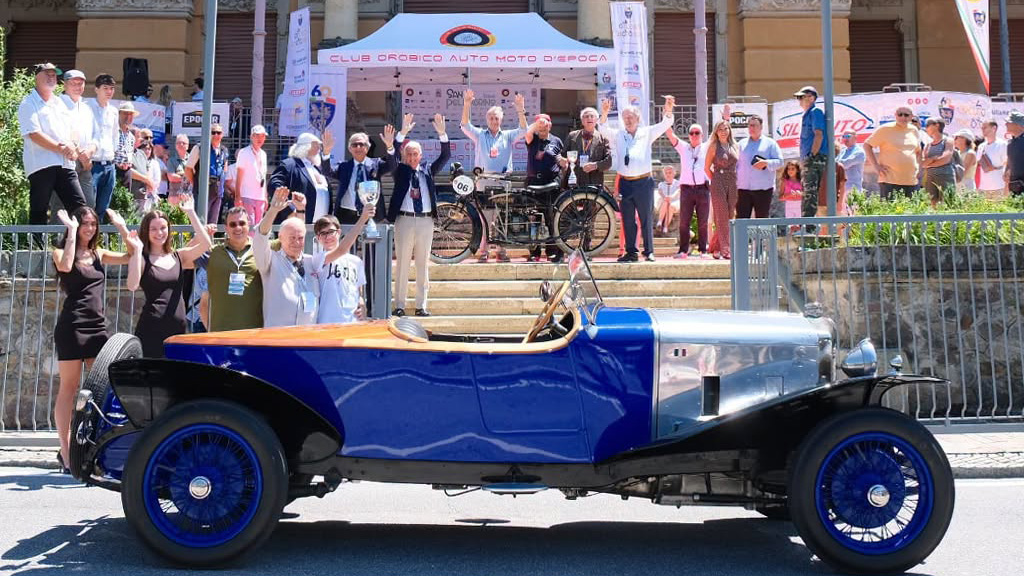
The 1925 Ballot Paris 2L Turismo Boat-Tail and the 1917 Henderson 1000 MS116 G are the big winners of the 2026 edition of the Concorso d’Eleganza Città di San Pellegrino Terme , winning the titles of Best of Show among the automobiles and the motorcycles respectively.

The event, organized by the Club Orobico Auto Moto d’Epoca , is part of the ASI national calendar and the ASI Circuito Tricolore. This year, too, it brought together highly prestigious historic cars and motorcycles, confirming its status as one of the few Italian concours events capable of combining the allure of two and four wheels in the same event.

The program opened on Friday with a roughly 140-kilometer route reserved for vintage motorcycles. Starting in San Pellegrino Terme, the caravan crossed the Brembana and Seriana Valleys, reaching towns such as San Giovanni Bianco, Dossena, Passo Zambla, Clusone, Lovere, and Selvino. A true traveling museum, it features thirty motorcycles built before 1945 and several more recent models.

Saturday’s event took place in the grounds of Villa Agliardi-Pesenti in Sombreno di Paladina, where cars and motorcycles were examined by the jury. Numerous categories were available, from century-old cars to pre-war vehicles, to supercars, protagonists of the Dolce Vita, and models chosen to celebrate the centenary of Carrozzeria Touring and the sixtieth anniversary of the ASI.

On Sunday, the grand finale took place in front of the Grand Hotel in San Pellegrino Terme. The participating cars and motorcycles paraded before the audience before the awards ceremony.

The most prestigious automotive award went to Albino Bertoletti’s 1925 Ballot Paris 2L Turismo Boat-Tail . Among the motorcycles, Fulvio Allasio’s 1917 Henderson 1000 MS116 G took Best of Show .

In the “Dives of the Dolce Vita” category, Alberto Bombassei’s 1958 Lancia Aurelia B20S GT took the win . The award reserved for the models chosen to celebrate the sixtieth anniversary of the ASI went to Roberto De Giovanni’s 1991 Alfa Romeo Spider 2.0 ie , while the 1954 Alfa Romeo 1900 SS by Carlo Grelewski took home the award among the cars designed by Carrozzeria Touring .

Other automobile awards included the 1904 Oldsmobile Curved Dash in the Centenary category, the 1936 Lancia Augusta Cabriolet in the Pre-War category, and the 1993 Ferrari FZ93 in the Supercar category.

In the motorcycle competition, the 1917 Harley-Davidson 1000 , the 1928 BMW R62 750 and the 1937 Sertum 500 Sidecar Longhi also received awards . The award for the best-preserved motorcycle went to the 1918 Bianchi 500 C75 , while the 1934 Vittoria 500 was chosen as the best restored motorcycle.

The 2026 edition thus concluded in the name of elegance, history, and motoring culture, accompanying participants to discover the roads and landscapes of the Orobic Valleys.