The Legend of Bassano 2026 crowns Perbellini and Maccari

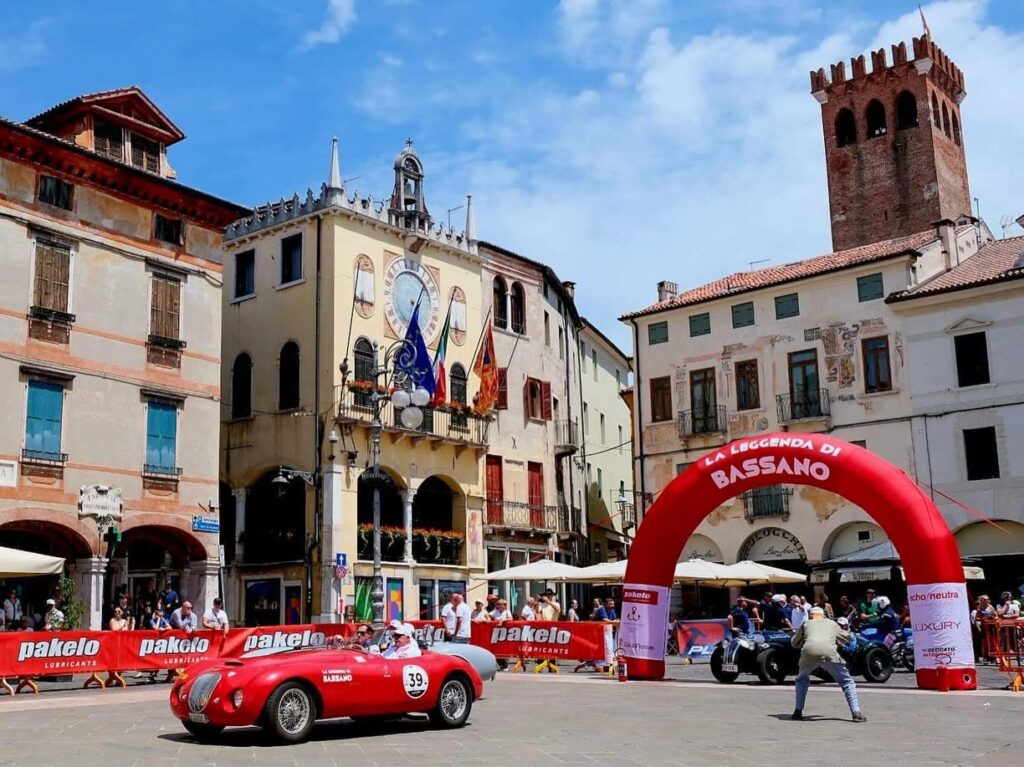
The 2026 edition of La Leggenda di Bassano – Trofeo Giannino Marzotto , an event dedicated to historic cars and included as the ninth stage of the ASI Tricolore Circuit, concluded in Bassano del Grappa .

After four days of landscapes, scenic roads, and some of the most evocative locations in Veneto and Trentino-Alto Adige, the event celebrated its winners in the heart of the Venetian city.

The overall classification was won by the crew formed by Perbellini and Maccari , at the wheel of a 1950 Jaguar Biondetti. Behind them were Pastore and Marino in a 1935 Fiat 508 S, while third place went to Ehlen and Koppel in a 1956 Porsche 356 Speedster.

From Bolzano to the arrival in Bassano del Grappa

The final day kicked off from Piazza Walther in Bolzano, with the crews heading towards the Vezzena plateau.

The route crossed the Strada del Vino and reached Asiago, where numerous enthusiasts greeted the cars. The convoy then continued to Bassano del Grappa, site of the final finish.

Piazza Libertà served as the backdrop for the classic cars’ entrance, welcomed by a large crowd. The vehicles were subsequently displayed in the city center, offering enthusiasts and visitors the opportunity to observe the models featured in this edition up close.

The awards ceremony at the Civic Museum

The closing ceremony took place in the cloister of the Civic Museum of Bassano del Grappa.

In addition to the overall victory of Perbellini and Maccari, the VIP category was won by the Polacco-Chemello crew in a 1959 Mercedes-Benz 190 SL.

The prestigious Giannino Marzotto Trophy was instead awarded to Alan Cosby’s Ferrari 250 TRI 59/60, one of the most representative cars present at the event.

The Maria Teresa De Filippis Trophy , reserved for the best female crew, went to Chiminelli-Chiminelli on a 1978 DAX Tojeiro Cobra 427.

All other awards

Numerous special prizes were also awarded during the ceremony.

The Ca’ Apollonio Trophy was won by Moroni and Filatondi in a 1957 Maserati 200 SI, while the Pakelo Trophy went to Rossetti and Perdicchia in a 1954 Maserati A6 GCS.

The Scuderia Musical Watch Veteran Car Club won the Scuderie Trophy. The Rossi Gomme Trophy was awarded to Brunori and Arcangeli, who competed in a 1952 Siata Daina.

The celebrations concluded at Villa Caffo Navarrini in Rossano Veneto, where organizers, participants, and partners met for the 2027 edition.

The Legend of Bassano has thus once again confirmed its ability to combine the allure of classic cars with the discovery of the local area, transforming the event into a meeting of automotive culture, tourism, and conviviality.

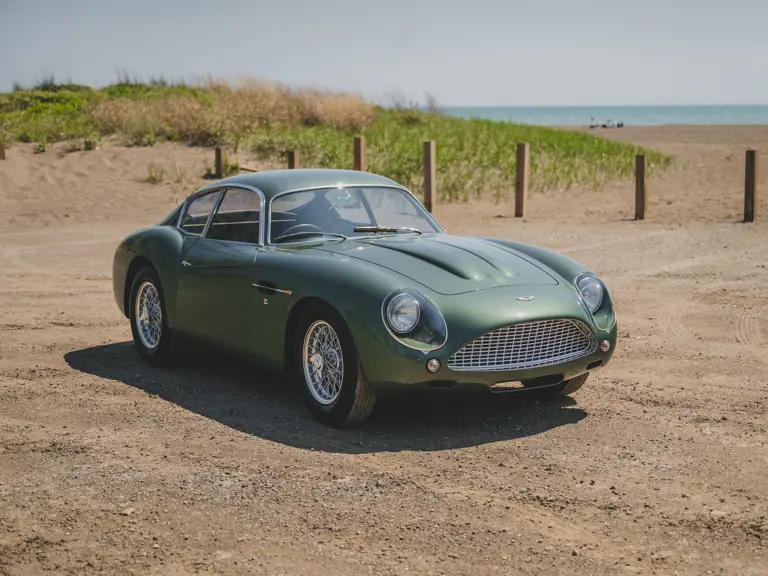
 

Monterey Car Week: RM Sotheby’s Auctions the Queens of Collectibles

From August 13 to 15, 2026, some of the world’s rarest and most desirable automobiles will be sold under the hammer at RM Sotheby’s. The event will take place in California, during Monterey Car Week, one of the leading events for international car collecting.

The sales catalogue spans over a century of automotive history: from the first cars of the twentieth century to the great Italian grand tourers, passing through elegant pre-war bodies, racing models and sports cars that have entered the collective imagination forever.

Leading the lineup is a 1962 Aston Martin DB4 GT Zagato, valued between $12 and $15 million. Built in just 19 examples, the car retains its matching numbers engine and boasts a racing history in Australia, as well as several awards won at the most prestigious concours d’elegance.

Among the most anticipated highlights is a 1938 Talbot-Lago T150-C SS Teardrop Coupé, with bodywork by Figoni et Falaschi. Considered one of the finest examples of pre-war French aerodynamic style, it has an estimate of $7 to $8 million.

Ferrari protagonist with three models

Maranello’s production will be represented by three cars that are profoundly different in terms of era and intended use.

The 1966 Ferrari 275 GTB Alloy by Scaglietti, estimated at $2.5 million to $3 million, is one of the finest interpretations of the 1960s Italian grand tourer.

From the endurance racing scene comes a 1979 Ferrari 512 BB/LM, estimated at between $2 million and $3.5 million. Completing the trio is a 1972 Dino 246 GTS, estimated at between $450,000 and $550,000.

The great Italian signatures

Alongside the Ferraris, the catalogue hosts other important expressions of the Italian automotive school.

Among these is a 1958 Lancia Aurelia B24S Convertible by Pinin Farina, estimated between $225,000 and $300,000. This model combined the elegance of an open body with the advanced technical solutions that made the Aurelia one of the most innovative cars of its time.

Also of particular interest is the 1953 Fiat 8V Coupé by Vignale, a rare interpretation of the famous “Otto Vu,” with an estimate between $750,000 and $1 million.

Also on display is a 1967 Lamborghini Miura P400, one of the cars that helped define the modern supercar. Designed by Bertone and featuring a mid-mounted V12 engine, it is estimated to fetch between $1.9 million and $2.8 million.

From Porsche to the great Mercedes

Among the German sports cars, a 1966 Porsche 911 Coupé will be offered, belonging to the first series of the model destined to become one of the absolute benchmarks in automotive history. The estimate is between $250,000 and $300,000.

The 1955 Mercedes-Benz 300 SL Gullwing, one of the most recognisable and sought-after post-war cars, is expected to fetch between 1.8 and 2.2 million.

The House of the Star will also be represented by an extremely rare 1904 Mercedes Simplex 40 HP Rear-Entrance Tonneau. A testament to the pioneering years of the automobile, it could fetch between 5 and 6 million.

Bugatti, Duesenberg and Corvette

Among the most prestigious lots is a 1937 Bugatti Type 57SC Atalante, valued between $4.5 and $6 million. The model is considered one of the finest examples of Bugatti production in the 1930s and one of the most sought-after cars among major collectors.

From the United States comes a 1935 Duesenberg Model JN Convertible Coupé, offered with an estimate of between 5.75 and 8 million.

The link to the world of racing will also be represented by a 1968 Chevrolet Corvette L88 Red/Nart, protagonist of the 24 Hours of Le Mans and valued between $900,000 and $1.1 million.

 
Nicolò Mazzini x Promotor Classic Magazine

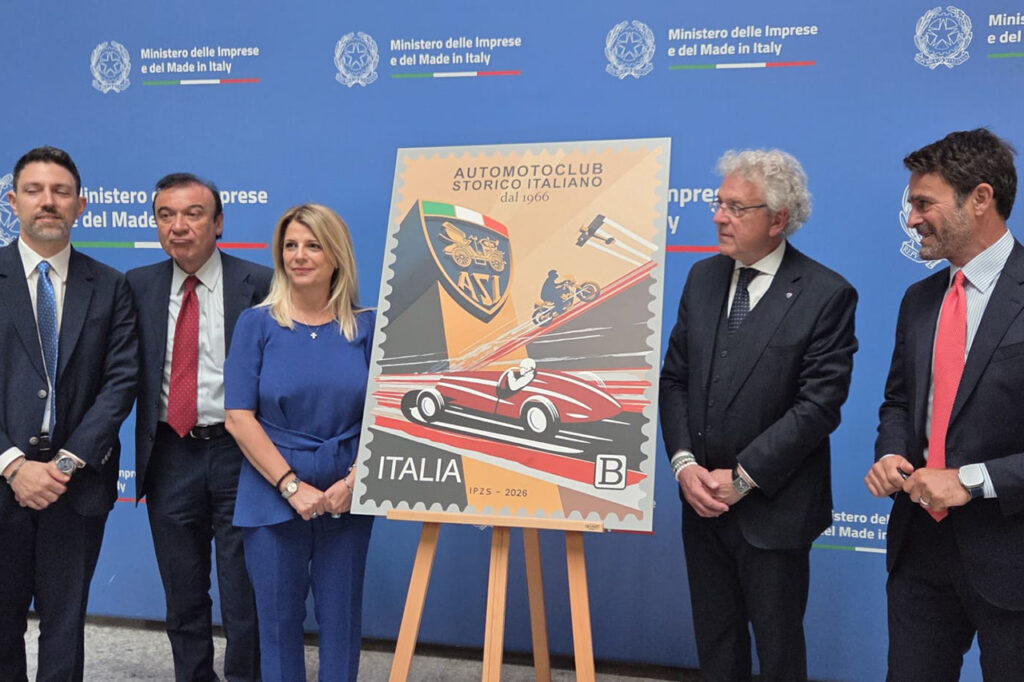
The commemorative stamp for ASI’s 60th anniversary was unveiled at the Ministry of Business and Made in Italy

The issue dedicated to the Italian Historic Automobile Club, part of the series “The Excellences of Italian Cultural Heritage,” was presented at Palazzo Piacentini.

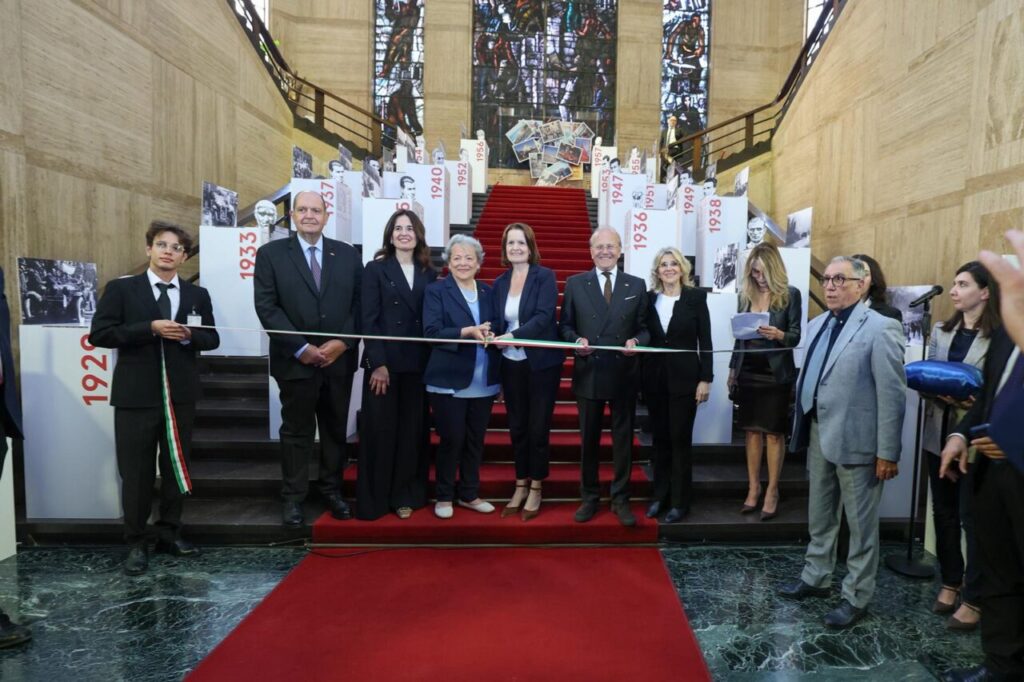
The Tapestry Hall of Palazzo Piacentini in Rome, home of the Ministry of Business and Made in Italy, hosted the official presentation of the definitive stamp dedicated to the 60th anniversary of the ASI – Automotoclub Storico Italiano.

The issue, part of the thematic series “The Excellences of Italian Cultural Heritage,” celebrates a significant milestone for the organization that has protected, promoted, and enhanced historic motoring in our country for six decades.

The ceremony was attended by Fausta Bergamotto, Undersecretary of State with responsibility for Philately, Alberto Scuro, President of ASI, Fabio Gregori, President of the Art Committee of the Philatelic Commission, Luca Sciascia, Head of Valuables and Mint Products at the Istituto Poligrafico e Zecca dello Stato, and Giovanni Machetti, Head of Philately at Poste Italiane.

The stamp’s graphic design highlights the dynamism of historic vehicles through a visual language reminiscent of Futurism, an early twentieth-century artistic movement that placed the machine, movement, and speed at the center of its vision as symbols of progress and human ingenuity.

This is no coincidence, designed to underscore the profound connection between historic motoring and culture, between the world of motors and the development of society, between the beauty of vehicles and the technical creativity that has accompanied the evolution of mobility. The reference to Italian tradition also aims to highlight our country’s role as one of the cradles of global motorization.

The dynamic features of the image also convey the idea of ​​a historic motoring that is not only focused on memory, but capable of looking to the future, continuing to express curiosity, passion, and the desire to discover new horizons.

The stamp issue is one of many initiatives promoted by the Automotoclub Storico Italiano to celebrate its 60th anniversary and share this important milestone with enthusiasts, clubs, and communities throughout Italy.

The message is clear: historic motoring represents a resource for the country and society. The story of the evolution of locomotion is part of global culture, having contributed significantly to the development of humanity over the last 150 years.

“A commemorative stamp,” emphasized Alberto Scuro, President of ASI, “is much more than a simple piece of paper used to frank mail: it is a veritable miniature time capsule. It is a guardian of memory, an ambassador of culture. And it is also a work of art. It is a symbol of what deserves to be remembered and passed down. For philatelic collectors, every commemorative stamp is a fragment of history to be preserved, a small graphic monument that transforms everyday mail into a vehicle of culture, capable of conveying the country’s identity and values ​​to the rest of the world.”

“Today’s recognition of the Automotoclub Storico Italiano,” stated Undersecretary Fausta Bergamotto, “is a heartfelt tribute to an organization that contributes to the development of one of our country’s most dynamic sectors. A unique heritage that represents the excellence of Made in Italy, a symbol of style, quality, and uniqueness. Historic vehicles span the history of the twentieth century with products featuring distinctive designs and proven performance, which have evolved over time but continue to keep the image of Italian ingenuity alive and convey it to new generations around the world.”

With this stamp issue, ASI celebrates sixty years of activity, confirming its role in protecting a technical, cultural, and social heritage that continues to tell the story of Italy through its historic vehicles.


Nicolò Mazzini x Promotor Classic Magazine

Turin celebrates the 90th anniversary of the Fiat Topolino

Over 130 crews from ten countries took part in the international rally dedicated to the first Fiat 500, symbol of popular Italian motoring

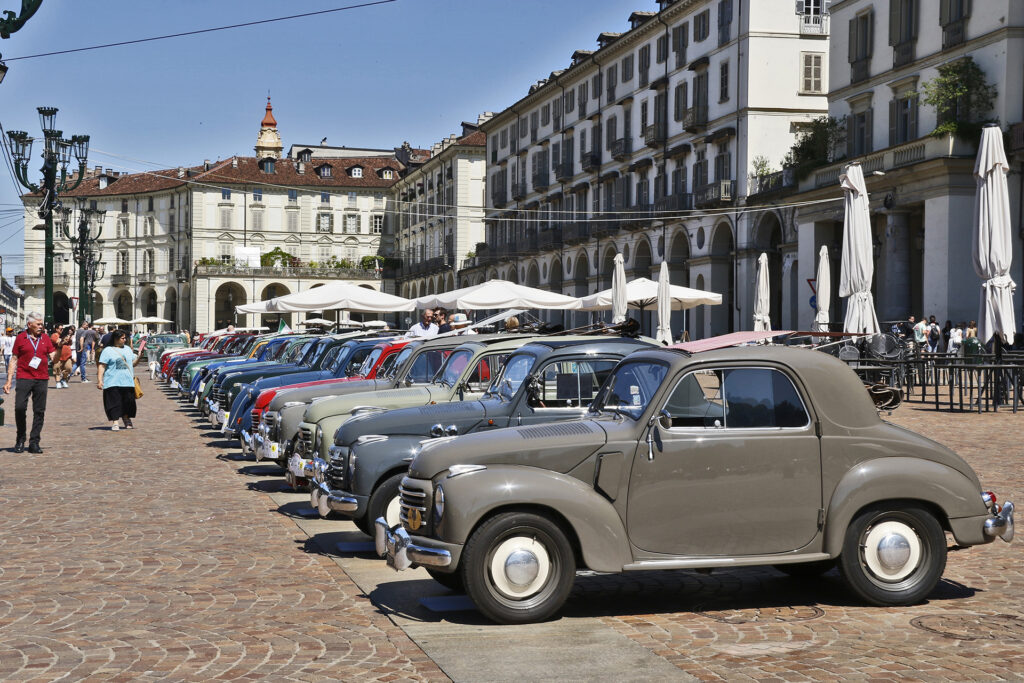
Turin celebrated the 90th anniversary of the Fiat Topolino with four days dedicated to the history, culture, and passion for one of the most beloved cars in Italian motoring. From Thursday, June 11th to Sunday, June 14th, 132 crews from ten European and non-European countries participated in “La Topolino va ai 90,” an international rally dedicated to the first Fiat 500, officially presented on June 15, 1936, and produced until January 18, 1955.

Since 2006, every ten years Turin hosts the Topolino’s most important anniversaries, paying homage to the deep bond between the small hatchback and the city that saw its birth. The event was organized by the Topolino Autoclub Italia and the Club Topolino Fiat Torino, with the support of the Automotoclub Storico Italiano, the Metropolitan City of Turin, and the European Federation of Fiat Topolino Clubs.

The program offered the crews a true immersion in the history and artistic heritage of the region. The event opened on Thursday with a climb up to the Sacra di San Michele, one of Piedmont’s iconic sites. On Friday, participants followed a circular route around Turin: divided into two groups, the “Topolinisti” followed the city perimeter clockwise and counterclockwise, reaching Venaria Reale and Superga.

On Saturday, the vehicles stopped in Piazza Vittorio Veneto, transforming one of the city’s most iconic spaces into a large open-air exhibition. The crews then visited the city center and the Egyptian Museum aboard a vintage tram from the Turin Historical Tram Association, adding a further element of charm to the day’s program.

The gala evening took place at the Mirafiori Heritage Hub, a symbolic location for Turin’s automotive history. The event was attended, among others, by Alessandra Cimadom, Director General of the City of Turin; Franco Fabbri, Commander of the Turin Highway Police; Antonio Traversa, Federal Councilor of the ASI (Italian Automobile Society), and Francesco Falciola, Coordinator of the ASI Historical Blue Flashing Light Commission.

The grand finale took place on Sunday at Rivoli Castle, the final stop of a gathering that combined memory, conviviality, and passion. During the event, the colorful convoy of Topolinos was accompanied by the Turin Local Police and the Highway Patrol, also present with a 1964 Fiat 1300 specially brought from the Florence Autocentro.

The four-day event also included the assembly of the European Federation of Fiat Topolino Clubs, during which the calendar for upcoming international rallies, held annually in various European countries, was finalized. The next event will be held in Rotterdam, Netherlands, in 2027.

The Turin rally also paid homage to the international spirit of the Topolino, a true “world car” ante litteram. The small Fiat was also produced abroad: in France under the Simca brand, in Germany as NSU-Fiat, and in Poland, confirming its popularity that extended well beyond Italy’s borders.

To see so many Topolinos gathered together in Italy again, we’ll have to wait until 2036, the year in which the mother of all Italian small cars will celebrate its centenary. This milestone will once again confirm the Topolino’s role as a timeless symbol of popular mobility and Italian industrial history.

 
Nicolò Mazzini x Promotor Classic Magazine

The 2026 Mille Miglia is ready to restart: the Freccia Rossa returns to the roads of Italy


With just a few days to go until the official start, the 2026 Mille Miglia is preparing to renew its timeless allure. The forty-fourth re-enactment of the “most beautiful race in the world” was presented on Friday, May 29, in the Salone Vanvitelliano of Palazzo Loggia in Brescia, the symbolic city of the Freccia Rossa and the start and finish point of the event.

The 2026 edition will take on a particularly significant significance: it will be the last major event before the historic centenary in 2027. For the occasion, the 1000 Miglia will once again feature the famous “figure eight” route, inspired by the layout of the first editions of the speed race, ideally embracing Italy through places, territories, and scenarios that tell the story of the country’s history and identity.

The convoy will depart from Brescia on Tuesday, June 9th and will cover a nearly 2,000-kilometer route over five days. After departing from Viale Venezia, the crews will cross Lombardy and Veneto to Padua, before continuing on the second leg to Ferrara, Modena, Reggio Emilia, and Montecatini Terme, passing through the Abetone Pass.

The third day will take the cars to the heart of Tuscany, passing through Lucca, Pietrasanta, Pisa, Pontedera, Siena, and the picturesque Val d’Orcia, before arriving in Rome. From there, the route will begin its ascent northward: on Friday, June 12th, the convoy will pass through Terni, Foligno, Assisi, Gualdo Tadino, Gubbio, the Furlo Gorge, and San Marino, with a stage finish in Rimini. On Saturday, June 13th, after passing through Cervia, Ferrara, and Mantua, the race will return to Brescia for the traditional final finish.

From a sporting perspective, the 2026 1000 Miglia promises to be particularly challenging. Crews from 33 countries will be called upon to tackle 144 time trials and 8 average speed trials, in a constant balance of precision, concentration, and management skills along the entire route.

As per tradition, the event will also be a veritable traveling museum. Among the cars on the starting grid will be numerous pre-war Alfa Romeo sports cars, Ferrari racing cars, Jaguar C-Types, Maserati A6 GCSs, and as many as 79 “Participant” cars, namely vehicles that took part in the Mille Miglia speed race between 1927 and 1957. A unique technical, historical, and cultural heritage, capable of transforming each stage into a celebration of international motorsport.

Brescia will be anticipating the start with a packed program of events. Technical and sporting checks will begin on Sunday, June 7th at the Brixia Forum, while Piazza Vittoria will host the 1000 Miglia Village, with events, meetings, and institutional events. Monday, June 8th will be dedicated to Holy Mass in the Cathedral, the stamping of the cars, and the 1000 Miglia Talk, before the official start scheduled for Tuesday, June 9th at 11:30 a.m.

The 1000 Miglia thus confirms itself as much more than a competition: it is a collective ritual, a bridge between memory and future, a celebration of Italian excellence that unites sport, culture, territory, and passion. With its eye already on its centenary, the Freccia Rossa is ready to write a new chapter in its legend.


Nicolò Mazzini x Promotor Classic Magazine