


With reference to the latest article published by La Stampa, signed by Vincenzo Borgomeo, I feel it is necessary to outline a few reflections.
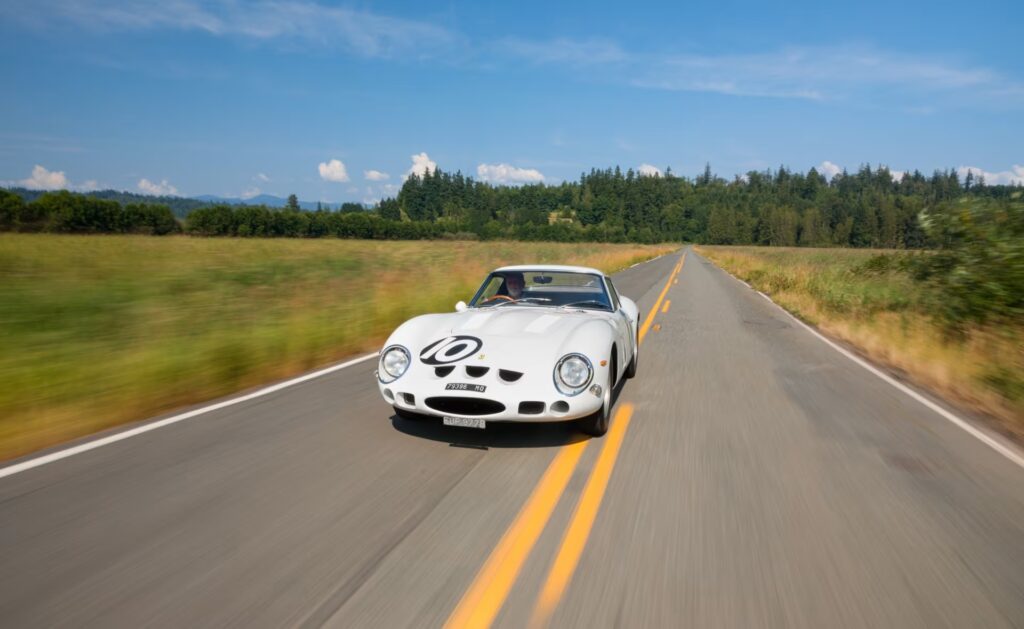
In recent days, alarmist tones have once again been used to describe an alleged “collapse” of the classic car market, taking as a pretext the auction sale of a Ferrari 250 GTO at a price below the most sensational expectations.
This, however, is a superficial interpretation that risks misleading public opinion and trivializing a sector that is complex, historical, and cultural.
This is not a collapse: it is a realignment.
If the market were truly collapsing, cars would not be selling. They would remain unsold, withdrawn, rejected by the market. But that is not what is happening. Top-tier automobiles continue to find buyers—simply at more coherent values, similar to those of around twenty years ago, before the sector was swept up in a wave of financial investments, speculative funds, and “package deals” that artificially inflated prices.
What we are witnessing today is not a free fall, but a natural correction: a return to values more closely linked to the historical, technical, and collectible reality of the cars themselves, rather than to irrational expectations of double-digit returns.
The market holds when passion guides decisions.
The classic car market remains strong—and will continue to do so—when purchases are driven by genuine passion: driving, participating in events, and experiencing automotive history.
It weakens, on the other hand, when a car is treated purely as a financial instrument, stored away in a vault while waiting for a capital gain.
I have long maintained that classic cars are not stocks or cryptocurrencies. They are cultural, technical, and sporting objects that require knowledge, maintenance, and use. When this principle is forgotten, the market becomes distorted. When it is restored, the market stabilizes.
The real issue, therefore, is not the market itself, but the narrative surrounding it.
To speak of a “collapse” of the historic automotive sector would require deep automotive culture and an understanding of the dynamics of the classic vehicle world: historic registers, differences between national markets, auction mechanisms, private sales, and above all, the history of the cars themselves.
Without this foundation, there is a risk of turning a single auction result into a sensational headline—perhaps effective at generating clicks, but ineffective at providing accurate information.
In conclusion, the classic car market is not collapsing. It is simply returning to breathing the clean air of true passion after years of inflated excesses.
Great cars remain great. Cars with history, use, and soul will continue to be desired.
What is truly collapsing, if anything, is the illusion that everything can rise indefinitely without passion, culture, and knowledge. More than a crisis, this is a return to the true essence of collecting.